
Carrollton, VA
Blacklegged (Deer) Tick Control in Carrollton
The Lyme disease vector, active in leaf litter and wooded edges. Subterranean termites along slab expansion joints and crawl space piers, crawl space moisture and decay fungus, mosquitoes breeding in stormwater ponds, and rodents and fall invaders moving in from the timber edge.
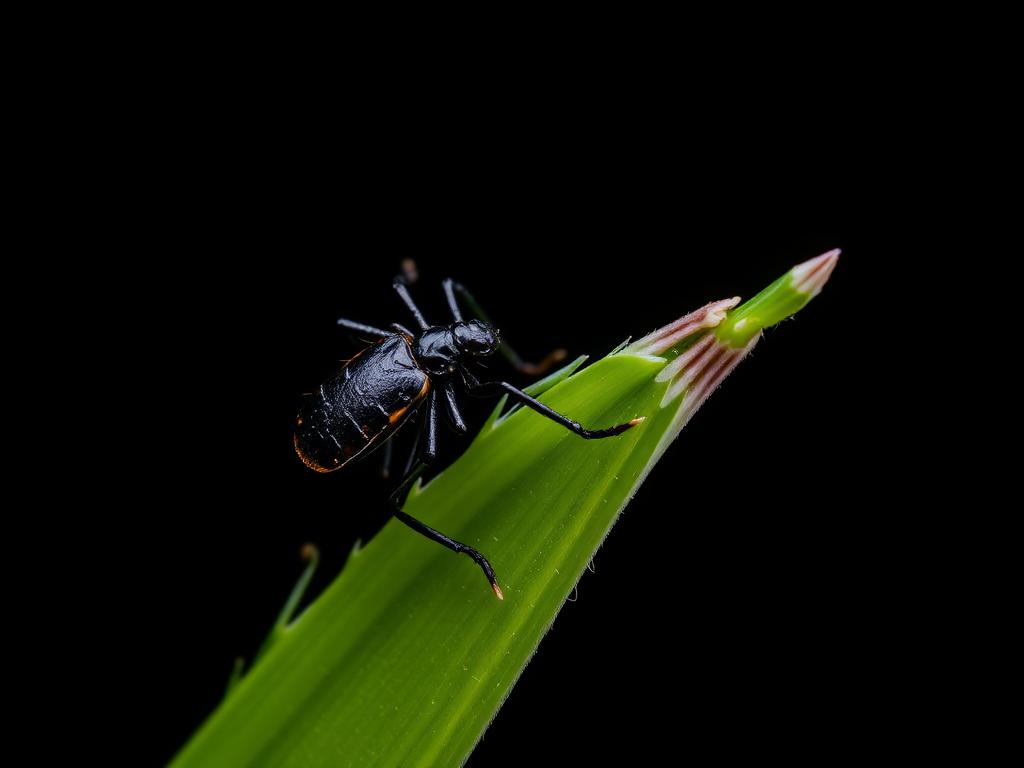
- Adult size
- Nymph 1/16", adult 1/8"
- Color
- Dark legs, reddish body
- Group size
- Solitary questers
- Lifespan
- 2-year life cycle
Identifying it
Very small, dark-legged tick; nymphs are roughly poppy-seed sized and are responsible for most transmission. Found on wooded edges, leaf litter, and tall grass.
Why Carrollton sees this
Heavily wooded parcels in Isle of Wight County, western Suffolk, and southern Chesapeake hold ideal habitat.
Late-1990s through current-build subdivisions on slabs and vented crawl spaces, plus older waterfront homes on Batten Bay and Jones Creek with original block foundations.
Tidal frontage on the James River and Batten Bay, high summer humidity, and hydric soils where developments back onto wooded buffers and drainage ponds.
The blacklegged tick, commonly called the deer tick, is the species behind Lyme disease across the eastern United States, and it is established in the wooded lot lines and leaf litter that border a large share of homes in Suffolk, Chesapeake, and Isle of Wight County. It does not jump or fly; it climbs to the tip of a leaf or blade of grass and waits, front legs extended, for a person, pet, or deer to brush past — a behavior called questing that makes wooded trail edges, tall grass, and brush piles its primary ambush points.
Nymphs are most active from roughly May through August, which lines up with the peak of the yard work, gardening, and hiking season in Hampton Roads and explains why most tick encounters happen in summer even though ticks are technically active nearly year-round here. Adult activity peaks in a smaller window in fall, roughly October through November, and again in early spring during mild winter stretches, since adult blacklegged ticks can remain active any time temperatures stay above freezing. Because the region rarely sees sustained hard freezes, tick checks after any wooded-area exposure are worth maintaining well beyond the traditional warm-season months.
When blacklegged (deer) tick activity peaks
Two peaks: nymphs in May and June, adults again in October and November.
May — activity index 95 / 100 (annual peak)
Does yours match? Interactive ID checklist
0 of 4 traits matched
Tick everything you can actually see.
Signs of blacklegged (deer) tick activity
- Ticks are found attached after time spent near wood lines, tall grass, or brush piles rather than on open, mowed lawn.
- Pets bring ticks in from yard time, often found around the ears, neck, or between toes during grooming.
- A small, hard-bodied tick the size of a poppy seed or sesame seed is found attached to skin.
- A slowly expanding red rash, sometimes with a clear center, appears at a bite site days after removal.
- Tick activity is noticeably worse along a specific edge of the property bordering woods or unmaintained brush.
- Deer or other wildlife are regularly seen crossing or bedding down near the property line.
Blacklegged (Deer) Tick threat profile
Structural risk
0/100
Damage to framing, floors and finishes
Health risk
90/100
Bites, stings, allergens and pathogens
Spread rate
40/100
How fast it multiplies once established
DIY difficulty
80/100
How reliably store products fail on it
Field notes: blacklegged (deer) tick you did not know
- Fact 01
The nymph that transmits most Lyme disease is the size of a poppy seed.
- Fact 02
Transmission generally requires 24 to 48 hours of attachment — daily checks matter.
- Fact 03
They quest by climbing vegetation and waiting with front legs outstretched.
How we remove it
Perimeter and transition-zone treatment, leaf litter removal, a dry barrier between lawn and woods, and seasonal repeat service.
Routing Carrollton daily, including Eagle Harbor, Carrollton Meadows, Founders Pointe, Church Point, Bridgewater, Riverpointe.
The Guardex blacklegged (deer) tick treatment plan
01 · Habitat and pressure assessment
The technician walks wood lines, brush piles, mulch beds against tree cover, and any trail or play area adjacent to woods to map where questing activity is concentrated on the specific property.
02 · Targeted vegetation treatment
Residual treatment is applied to the identified questing zones — leaf litter edges, tall grass borders, brush — rather than blanket-spraying the entire mowed lawn, since ticks in this region rarely establish in short, sun-exposed turf.
03 · Habitat modification recommendations
The technician identifies conducive conditions such as brush piles, leaf litter accumulation, and un-mowed buffer strips that sustain rodent hosts and tick populations, and recommends specific changes to reduce them.
04 · Seasonal retreatment
Because nymph and adult activity peak in separate windows, treatment is scheduled around late spring for nymphs and fall for adults rather than as a single annual visit.
Why store-bought products usually fail
Retail yard sprays are typically applied across open lawn, which is exactly the area blacklegged ticks avoid, while the leaf litter and wood-line habitat where they actually quest goes untreated. Homeowners also tend to underestimate attachment time and miss nymphs due to their poppy-seed size, which undermines the personal-check side of prevention regardless of any yard treatment. Effective control requires targeting the specific microhabitat where ticks quest with a product and timing suited to that habitat, along with addressing the rodent and deer activity that sustains the population — work that goes well beyond a single perimeter spray.
Prevention checklist
- Mow regularly and maintain a clear, sunny buffer between lawn and wood lines.
- Remove leaf litter and brush piles near the yard, especially close to play areas.
- Stack firewood away from the house and off the ground to reduce rodent harborage.
- Use tick preventives on pets year-round, since Hampton Roads rarely has a hard freeze that fully suspends activity.
- Do a full-body tick check, including hairline and behind ears, after any yard work or wooded-area exposure.
- Wear light-colored clothing and tuck pants into socks when working near brush or wood lines.
Blacklegged (Deer) Tick questions we get asked
- Is Lyme disease actually a concern in Hampton Roads specifically?
- Blacklegged ticks are established in wooded parts of Suffolk, Chesapeake, and Isle of Wight County, and Lyme risk exists wherever this species is present; actual case rates are tracked by the Virginia Department of Health and vary by year and location.
- My yard is mowed and open — do I still need treatment?
- Open, sun-exposed turf is low risk for this species, but if your property borders woods, brush, or tall grass, that edge habitat can sustain a questing population even with a well-maintained lawn.
- How is a tick removed correctly?
- Use fine-tipped tweezers to grasp the tick as close to the skin as possible and pull straight up with steady pressure; avoid twisting or crushing the body, and clean the site afterward.
- How much does yard tick treatment cost and how often is it needed?
- Pricing depends on property size and the amount of wooded or brush edge to be treated; most properties with significant tree line exposure run treatments in late spring and again in fall to match nymph and adult activity peaks.
- Do you treat for ticks and mosquitoes together?
- Yes, many properties combine both since wooded lot lines and brushy edges commonly support tick questing habitat alongside standing water or shaded mosquito resting sites nearby.
Other pests in Carrollton
- Eastern Subterranean Termite control in Carrollton
- Formosan Subterranean Termite control in Carrollton
- Powderpost Beetle control in Carrollton
- Carpenter Ant control in Carrollton
- Carpenter Bee control in Carrollton
- Wood-Decay Fungus control in Carrollton
- German Cockroach control in Carrollton
- American Cockroach control in Carrollton
- Oriental Cockroach control in Carrollton
- Odorous House Ant control in Carrollton
- Red Imported Fire Ant control in Carrollton
- Norway Rat control in Carrollton
- House Mouse control in Carrollton
- Squirrel control in Carrollton
- Camel Cricket control in Carrollton
- Springtail control in Carrollton
- Asian Tiger Mosquito control in Carrollton
- Salt Marsh Mosquito control in Carrollton
- Yellowjacket control in Carrollton
- Bed Bug control in Carrollton
- Brown Marmorated Stink Bug control in Carrollton
Blacklegged (Deer) Tick nearby in Isle of Wight
Blacklegged (Deer) Tick problem in Carrollton?
Tell us where you are finding them and how often. We will confirm the species and put a plan on the calendar.
Request an inspection