
Chesapeake, VA
Springtail Control in Chesapeake
Tiny jumping specks appearing in bathrooms and along damp baseboards. Termite pressure is constant. Crawl space moisture, wood-decay fungus, and the moisture-driven invaders — camel crickets, springtails, oriental cockroaches — are the defining local problem, along with mosquitoes bred in the ditch network.
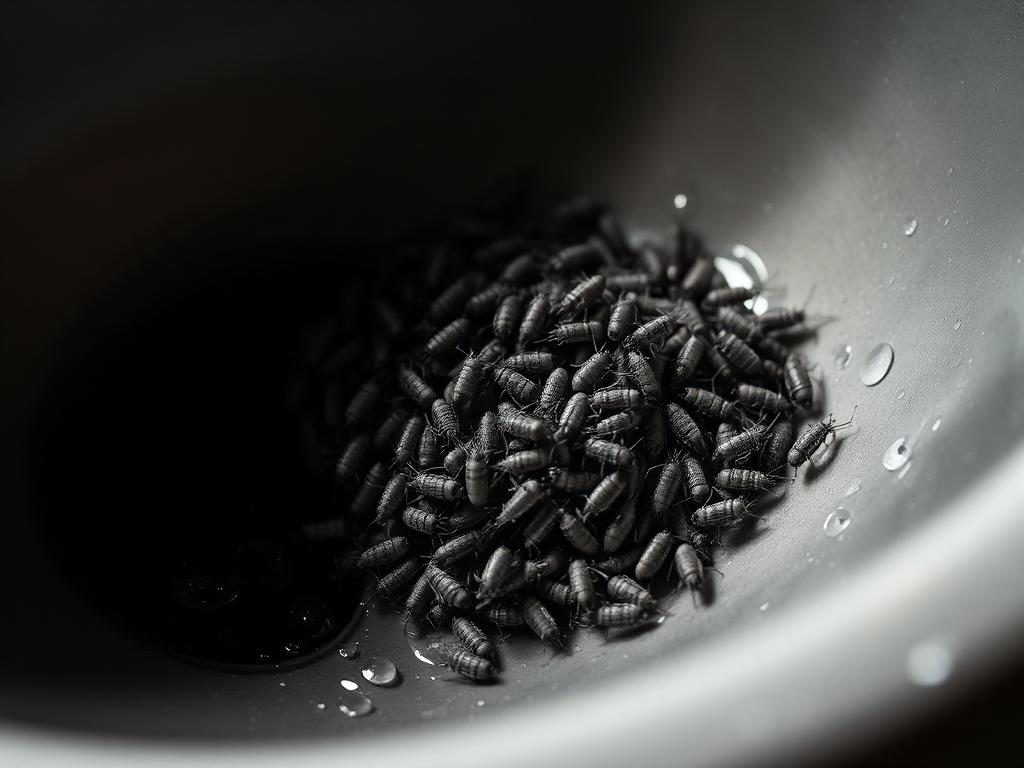
- Adult size
- 1/16"
- Color
- Grey, white or bluish
- Group size
- Thousands per square foot
- Lifespan
- Several weeks
Identifying it
Under a sixteenth of an inch, gray to dark, jumping when disturbed. Appear in large numbers in sinks, tubs, window tracks, and along wet baseboards.
Why Chesapeake sees this
They feed on mold and require saturated conditions — a crawl space or wall void with high humidity produces them continuously.
New slab construction dominates Grassfield, Western Branch, and Greenbrier; South Norfolk and Deep Creek hold older frame houses on vented crawl spaces, many with original sill plates.
Poorly drained hydric soils, a very high water table, and the Great Dismal Swamp on the southern flank. Ditch-and-canal drainage means standing water sits close to foundations after storms.
Springtails are tiny enough that most homeowners in Hampton Roads first notice them as unexplained specks moving in a bathtub, sink, or window track rather than as identifiable insects. Under a sixteenth of an inch and capable of jumping when disturbed, they appear suddenly and in large numbers, which tends to alarm people well out of proportion to the actual risk they pose — springtails don't bite, don't damage structures, and don't spread disease.
Indoor sightings are most common in late winter and spring, when condensation from temperature differentials between indoor and outdoor air is highest and bathroom and basement humidity peaks. A secondary rise occurs during Hampton Roads' humid summer months, when overall ambient moisture is elevated across the region regardless of specific plumbing issues. Because the underlying population in a crawl space or wall void depends on consistent dampness rather than outdoor temperature, springtails can appear indoors at any time of year if the moisture source is active, including after a plumbing leak or heavy rain event pushes water into an area that's normally only marginally damp.
When springtail activity peaks
Indoor appearances follow wet spells in spring and late summer.
August — activity index 90 / 100 (annual peak)
Does yours match? Interactive ID checklist
0 of 4 traits matched
Tick everything you can actually see.
Signs of springtail activity
- Small, dark, jumping specks appearing in large numbers in a sink, tub, or shower basin.
- Specks accumulating along a window track or damp windowsill.
- Visible mold or mildew on baseboards, drywall, or crawl space framing near where the insects appear.
- A musty odor in the room or space where sightings are concentrated.
- Repeated appearance in the same location despite regular cleaning.
- Condensation or visible moisture on pipes, walls, or crawl space surfaces near the affected area.
Springtail threat profile
Structural risk
5/100
Damage to framing, floors and finishes
Health risk
5/100
Bites, stings, allergens and pathogens
Spread rate
50/100
How fast it multiplies once established
DIY difficulty
60/100
How reliably store products fail on it
Field notes: springtail you did not know
- Fact 01
They launch themselves with a tail-like furcula — hence the jumping, flea-like motion.
- Fact 02
They eat mold, not your house, so their presence maps directly to a damp surface.
- Fact 03
Populations in damp soil can exceed 100,000 per square meter.
How we remove it
Locate and correct the moisture source. Crawl space encapsulation, drainage, and leak repair eliminate them; surface sprays do not.
Routing City of Chesapeake daily, including Great Bridge, Greenbrier, Western Branch, Deep Creek, South Norfolk, Grassfield.
The Guardex springtail treatment plan
01 · Moisture source inspection
We trace the springtail activity back to its moisture source, checking crawl spaces, wall voids, window seals, and plumbing for the specific condition sustaining the mold and fungal growth they feed on.
02 · Correction of the moisture source
Depending on findings, this may mean leak repair, improved ventilation, drainage correction, or crawl space encapsulation — whatever addresses the actual damp condition rather than just the visible insects.
03 · Mold and residue cleanup
Where mold has developed on affected surfaces, it's addressed as part of the correction, since leaving it in place means the food source for any remaining springtails is still available.
04 · Verification visit
A follow-up check confirms humidity has dropped in the affected area and sightings have stopped, since surface treatments without a moisture fix typically show recurrence within weeks.
Why store-bought products usually fail
Wiping up visible springtails or spraying the surface where they appear addresses only what's visible for a day or two, since the population sustaining those insects is usually located somewhere out of sight, like a crawl space or wall void, and continues producing more. Identifying the actual moisture source often requires checking areas a homeowner wouldn't normally inspect — crawl space soil conditions, hidden plumbing leaks, or window flashing — and misdiagnosing the source means any fix attempted won't stop the recurrence. Because springtails can persist indefinitely under the right conditions, a homeowner treating only the symptom can end up repeating the same ineffective cleanup for months.
Prevention checklist
- Improve bathroom ventilation to reduce chronic condensation on tile, tubs, and window frames.
- Repair plumbing leaks promptly, even minor ones that seem insignificant.
- Install or repair a vapor barrier in crawl spaces with exposed damp soil.
- Ensure gutters and downspouts direct water away from the foundation.
- Address window seals and flashing that allow condensation or water intrusion.
- Reduce indoor humidity with dehumidification in chronically damp basements or crawl spaces.
Springtail questions we get asked
- Are springtails harmful to my health?
- No, they don't bite, sting, or spread disease. Their presence is mainly a signal of excess moisture and mold growth nearby, which is worth addressing for its own sake.
- Why do they keep coming back after I clean the sink?
- Because the population producing them is usually somewhere out of sight, like a crawl space or wall void, cleaning the visible ones doesn't affect the source. Correcting the underlying moisture is what stops the recurrence.
- Is this related to my crawl space?
- Very often, yes. Vented crawl spaces over damp soil, common across this region, are one of the most frequent sources we trace springtail activity back to during an inspection.
- Do you see springtail issues often in Suffolk and Chesapeake?
- Yes, particularly in newer construction with inadequate crawl space drainage as well as older homes with chronic condensation issues in bathrooms and basements.
- How long does it take to fully resolve?
- Once the moisture source is identified and corrected, sightings typically stop within one to two weeks as existing moisture dries out. Full crawl space corrections can take a bit longer depending on scope.
Other pests in Chesapeake
- Eastern Subterranean Termite control in Chesapeake
- Formosan Subterranean Termite control in Chesapeake
- Powderpost Beetle control in Chesapeake
- Carpenter Ant control in Chesapeake
- Carpenter Bee control in Chesapeake
- Wood-Decay Fungus control in Chesapeake
- German Cockroach control in Chesapeake
- American Cockroach control in Chesapeake
- Oriental Cockroach control in Chesapeake
- Odorous House Ant control in Chesapeake
- Red Imported Fire Ant control in Chesapeake
- Norway Rat control in Chesapeake
- House Mouse control in Chesapeake
- Squirrel control in Chesapeake
- Camel Cricket control in Chesapeake
- Asian Tiger Mosquito control in Chesapeake
- Salt Marsh Mosquito control in Chesapeake
- Blacklegged (Deer) Tick control in Chesapeake
- Yellowjacket control in Chesapeake
- Bed Bug control in Chesapeake
- Brown Marmorated Stink Bug control in Chesapeake
Springtail nearby in South Hampton Roads
Springtail problem in Chesapeake?
Tell us where you are finding them and how often. We will confirm the species and put a plan on the calendar.
Request an inspection