
Ants
Argentine Ant Control in Hampton Roads
Supercolonies with massive trails and multiple queens.
Linepithema humile
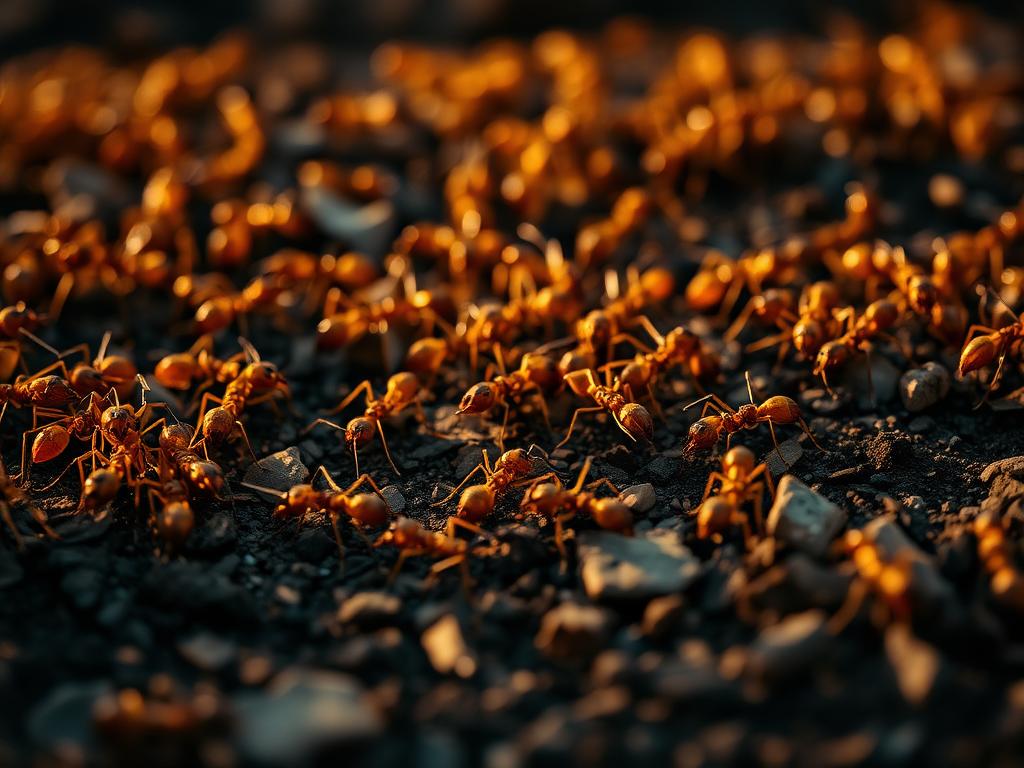
- Adult size
- 1/8"
- Color
- Uniform light to dark brown
- Group size
- Supercolonies, millions
- Lifespan
- Queen about 1 year
Argentine ants are a light-to-medium brown species that form some of the widest, most persistent foraging trails of any ant found in Hampton Roads, often running many feet along a foundation, sidewalk, or exterior wall without an obvious break. Unlike many native ant species, Argentine ant colonies lack the aggression toward unrelated colonies typical of most ants — instead, colonies from the same broader population cooperate, which lets local populations grow into extended supercolonies covering multiple properties rather than staying contained to a single nest.
This species is well established in warmer parts of the coastal south and continues to expand its range, and irrigated landscaping and mulch beds — common in newer developments across Virginia Beach, Suffolk, and Chesapeake — give it exactly the shallow, moist nesting sites it favors. Because colonies can include many cooperating queens distributed across interconnected nests, a property can host what looks like several separate ant problems that are actually one extended network.
The practical consequence for homeowners is scale: Argentine ant trails are frequently visible year-round in irrigated landscaping, they move indoors in large numbers when conditions push them, and a treatment plan needs to address the full colony network rather than a single visible trail to have a lasting effect.
How to identify argentine ant
Light to medium brown, an eighth of an inch, forming very wide and persistent trails. No strong odor when crushed.
When argentine ant activity peaks
Massive foraging trails from May through September.
June — activity index 95 / 100 (annual peak)
Argentine Ant biology and life cycle
Argentine ant colonies are unicolonial and polygynous, meaning they support many queens across cooperating, interconnected nests that function more like one extended network than separate colonies, which is unusual compared to most ant species and is a major reason populations can become so large. Development from egg to worker takes roughly a month under warm conditions, and because reproduction is distributed across many queens simultaneously, worker numbers can rebound quickly from a partial treatment. Colonies often relocate nest sites in response to changing moisture conditions, moving from a shaded mulch bed to a foundation void or a potted plant as conditions shift through the seasons, which makes a single fixed nest location difficult to pin down for very long. This mobility and distributed reproduction combine to make Argentine ants one of the more persistent ant species to fully eliminate from a property, requiring sustained rather than one-time treatment.
When argentine ant pressure peaks in Hampton Roads
Argentine ant foraging activity in Hampton Roads is heaviest during the warm, humid stretch from late spring through summer, when irrigated landscaping stays consistently moist and food demand for the large worker population peaks. Colonies often relocate nests seasonally, moving to shadier, more insulated locations — including building foundations and wall voids — during the hottest and driest parts of summer, which is frequently when homeowners first notice indoor activity. Cooler weather in fall and winter slows activity outdoors but rarely eliminates it entirely in the mild coastal climate typical of the region, and indoor nesting sites can sustain low-level winter activity in heated structures. Heavy rain can also displace shallow outdoor nests, pushing foraging trails toward drier ground along foundations and into structures.
Argentine Ant threat profile
Structural risk
5/100
Damage to framing, floors and finishes
Health risk
15/100
Bites, stings, allergens and pathogens
Spread rate
95/100
How fast it multiplies once established
DIY difficulty
90/100
How reliably store products fail on it
Does yours match? Interactive ID checklist
0 of 4 traits matched
Tick everything you can actually see.
Why it is in your house
Established in the warmer coastal south and expanding. Irrigated landscaping and mulch beds give them ideal nesting conditions.
Field notes: argentine ant you did not know
- Fact 01
Neighboring nests do not fight, so a single colony can stretch across an entire block.
- Fact 02
They farm aphids on shrubs for honeydew and defend them from predators.
- Fact 03
Repellent sprays are the single fastest way to make an Argentine ant problem larger.
Signs of argentine ant activity
- Very wide, continuous foraging trails along foundations, sidewalks, and exterior walls, often more conspicuous than other ant species.
- Large numbers of small brown ants moving in a steady, uninterrupted line rather than a scattered trail.
- No strong odor when the ants are crushed, distinguishing them from odorous house ants.
- Nests found under stepping stones, mulch, potted plants, or shallow soil near irrigation lines.
- Trails that persist across a wide area of a property rather than concentrating around a single point.
- Indoor activity increasing during the hottest, driest stretches of summer as colonies relocate nests.
What argentine ant activity costs you
Argentine ants do not bite or sting people in any meaningful way and carry no direct disease risk, so the primary concern is the scale and persistence of the infestation rather than a health hazard. Because unicolonial supercolonies can displace native ant species in a landscape, properties with an established Argentine ant population sometimes see reduced populations of other, less problematic insects that native ants would otherwise compete with or prey on. The practical homeowner risk is mostly one of scope creep: because the colony network can extend across several connected properties in the same neighborhood, treatment on a single property without addressing wider conditions can see the trail simply reappear from an adjacent nest.
What actually removes it
Sustained non-repellent perimeter treatment and baiting across the whole colony network, plus reduction of moisture and mulch harborage.
Ant ControlThe Guardex argentine ant treatment plan
01 · Property-wide trail and nest survey
We map foraging trails across the full property, including irrigated beds, foundation edges, and shaded structures, since Argentine ant colonies frequently span a wider area than a single visible trail suggests.
02 · Non-repellent perimeter application
We apply a non-repellent treatment along the full foundation perimeter and known trail routes so foragers carry the active ingredient back through the interconnected colony network rather than being pushed toward the structure.
03 · Targeted baiting at active trails
Bait is placed directly on or near active foraging lines, since Argentine ants recruit heavily to a good food source and will carry bait back efficiently once a preferred trail is identified.
04 · Moisture and mulch management
We flag irrigation overspray, dense mulch against the foundation, and other consistently moist conditions that sustain nesting, and recommend adjustments to reduce the property's attractiveness to new colony expansion.
Why store-bought products usually fail
Because Argentine ant colonies are unicolonial with many queens spread across a wide, often multi-property network, a homeowner treating a single visible trail with a retail spray typically affects only a small fraction of the population, and the trail reappears once foraging resumes from an unaffected part of the colony. Repellent sprays applied along a foundation can also push activity toward a different entry point rather than reducing the overall population. Because nests relocate seasonally in response to moisture, a homeowner who successfully treats one nest site may find activity re-establishing nearby within weeks in a new location, without professional monitoring to track the shift. The scale of a mature colony network, which can extend well beyond a single yard, is also generally outside what a homeowner can assess or treat effectively on their own.
Prevention checklist
- Reduce irrigation frequency and avoid overwatering mulch beds directly against the foundation.
- Keep mulch layers thin and pulled back from the foundation edge.
- Move potted plants periodically to disrupt shallow nesting underneath them.
- Trim vegetation and tree limbs away from siding and rooflines to limit trail access points.
- Seal visible cracks and gaps in foundations, especially near irrigation lines and hose bibs.
- Address standing water and poor drainage that keep soil near the structure consistently moist.
Where argentine ant pressure runs highest
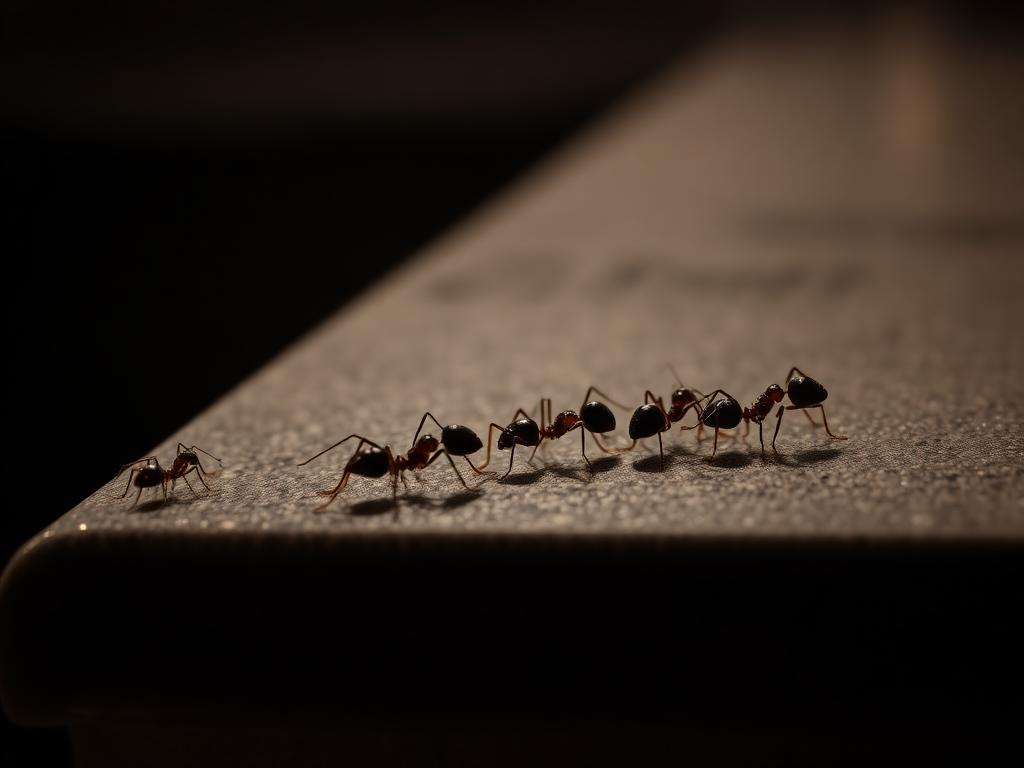
Commonly mistaken for argentine ant

Argentine Ant questions we get asked
- Why are the ant trails on my property so wide and constant?
- That density and persistence is characteristic of Argentine ants, whose colonies cooperate across many nests rather than competing the way most ant species do, allowing populations to grow much larger than a typical single-nest colony.
- Is this ant established in Virginia Beach and Suffolk?
- Yes, Argentine ants are established across warmer parts of the coastal south and continue to expand, and irrigated landscaping common in newer developments in both areas provides favorable nesting conditions.
- Why did the ants come back after I sprayed the trail myself?
- A retail spray typically reaches only part of an extended, multi-queen colony network, so the remaining nests continue producing workers and simply re-establish the trail, sometimes at a slightly different point.
- How long does full control take?
- Because of the colony's scale and mobility, sustained treatment over several weeks is usually needed, with noticeable trail reduction in the first one to two weeks and continued monitoring after that to catch relocated nests.
- Do these ants bite or sting?
- No, Argentine ants are not aggressive toward people and do not sting; the concern with this species is population size and persistence rather than any direct health risk.
Services that handle argentine ant problems
- Quarterly Pest ControlRecurring exterior-focused program covering the region's standard pest set.
- Cockroach ControlGerman roach elimination indoors, American and oriental roach control at the source.
- Rodent Control & ExclusionTrapping paired with physical exclusion so they cannot come back.
- Mosquito & Tick ControlYard programs targeting harborage and standing-water breeding sites.
- Bed Bug TreatmentInspection-driven treatment programs with confirmation follow-ups.
- Wildlife ExclusionSquirrel, raccoon, opossum, and bat removal with permanent structural sealing.
Others in this category
Confirm the ID and get it handled
Send a photo and the location in the structure. A licensed technician will tell you the species and whether it needs a visit.
Request an inspection