
Norfolk, VA
Eastern Subterranean Termite Control in Norfolk
The default termite threat in every Hampton Roads city. Eastern subterranean termites everywhere, confirmed Formosan subterranean termite exposure since 2022, Norway rats in the older dense blocks and alleys, German cockroaches in multi-family stock, and crawl space decay fungus after every flood cycle.
- Adult size
- 1/8" worker, 3/8" swarmer
- Color
- Creamy white / dark brown swarmer
- Group size
- 60,000 – 1,000,000 workers
- Lifespan
- Queen 25+ years
Identifying it
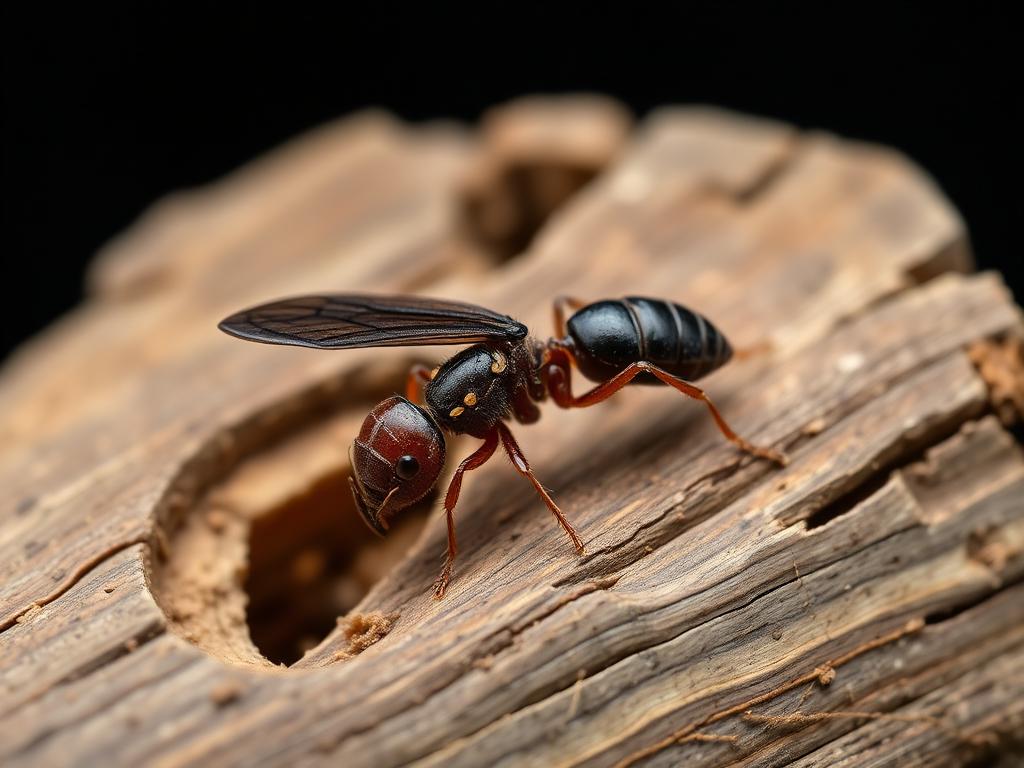
Creamy white workers about an eighth of an inch, dark-bodied swarmers with two pairs of equal-length wings, and pencil-width mud tubes running up piers and foundation walls. Damaged wood follows the soft spring growth and is packed with soil.
Why Norfolk sees this
They are endemic across the coastal plain and require soil contact plus moisture — both of which a vented crawl space over a high water table supplies year-round. Swarms typically appear on warm days from late winter through spring.
Early 20th-century bungalows, four-squares, and rowhouses in Ghent, Colonial Place, Park Place, and Larchmont, nearly all on vented crawl spaces with original framing. Newer infill and apartments sit on slab.
Low elevation with recurrent nuisance tidal flooding in Larchmont, Colonial Place, and the Hague area. Water table is at or near grade in much of the city, and the Port of Norfolk brings continuous international cargo.
Eastern subterranean termites are the baseline termite risk for every property between Poquoson and Suffolk, not an occasional problem. Colonies live in the soil, not the wood, which is why a homeowner can walk a crawl space for years without seeing a single termite while the colony forages through mud tubes on the far side of a pier. The insects need three things to sustain a colony near a structure: soil contact, cellulose, and stable moisture, and the Hampton Roads coastal plain supplies all three without effort.
Swarms are the most visible sign of activity and follow a fairly predictable local pattern: warm, humid days after rain from late February through May, often right after a cold front clears out and temperatures climb into the 70s. Homeowners across Virginia Beach and Newport News frequently report swarms inside sunrooms and near windows on the same handful of warm afternoons each spring, since indoor colonies swarming from wall voids get funneled toward window light. Foraging itself does not stop in winter here — the ground rarely freezes deep enough on the coastal plain to force the colony below the frost line for long, so activity slows in the coldest weeks but does not fully shut down the way it does farther inland or north.
When eastern subterranean termite activity peaks
Swarms fire on warm, humid afternoons from late February through May, usually a day or two after rain.
April — activity index 95 / 100 (annual peak)
Does yours match? Interactive ID checklist
0 of 5 traits matched
Tick everything you can actually see.
Signs of eastern subterranean termite activity
- Mud tubes about the width of a pencil running up foundation piers, block walls, or exterior brick veneer.
- Swarmer wings shed in piles on windowsills, in spiderwebs, or along baseboards after a warm rain.
- Wood that sounds hollow or papery when tapped, especially at sill plates and floor joist ends.
- Damaged wood that follows the soft spring growth rings and is packed with soil or mud inside the galleries.
- Buckling paint or blistering on baseboards and door trim that resembles water damage but has no active leak.
- Small holes in drywall near the floor line where a colony has begun tubing through from a wall void.
Eastern Subterranean Termite threat profile
Structural risk
95/100
Damage to framing, floors and finishes
Health risk
5/100
Bites, stings, allergens and pathogens
Spread rate
70/100
How fast it multiplies once established
DIY difficulty
95/100
How reliably store products fail on it
Field notes: eastern subterranean termite you did not know
- Fact 01
Workers are blind and navigate entirely by pheromone trail and vibration.
- Fact 02
A mature colony can consume roughly a linear foot of 2x4 pine in about five months — quietly, from the inside out.
- Fact 03
They cannot tolerate open air, so every trip above soil is made inside a mud tube they build from soil and saliva.
How we remove it
A continuous liquid termiticide barrier or a monitored bait system, paired with correction of the conducive conditions: wood-to-ground contact, grade against siding, and crawl space moisture.
Routing City of Norfolk daily, including Ghent, Larchmont, Colonial Place, Park Place, Ocean View, Riverview.
The Guardex eastern subterranean termite treatment plan
01 · Inspection and conducive-condition mapping
A licensed technician inspects the full accessible crawl space, foundation perimeter, and attic for tubes, damage, and moisture readings. Conducive conditions like wood-to-soil contact, grade too close to siding, and standing crawl space water are documented before any product is applied.
02 · Liquid barrier or bait system installation
Depending on soil access and construction type, GUARDEX installs a continuous non-repellent liquid termiticide barrier around the foundation or a monitored in-ground bait system at intervals around the structure. The choice depends on slab versus crawl space construction, landscaping, and hardscape obstacles.
03 · Correction of moisture and contact points
Wood-to-ground contact, buried scrap lumber, and grade issues that keep the crawl space moisture elevated are corrected as part of the same visit where feasible. These conditions are what drew the colony to the structure in the first place, and leaving them unaddressed invites reinfestation.
04 · Monitoring and annual renewal
Bait stations are checked on a scheduled basis and liquid-barrier homes receive an annual inspection to confirm the barrier is intact and no new mud tubing has appeared. Most termite service agreements in this region are renewed annually and include re-treatment coverage.
Why store-bought products usually fail
Retail termite stakes and foam products sold at hardware stores in Chesapeake and Virginia Beach are formulated at consumer-grade concentrations that are legally capped well below the professional label rate, and they are almost never installed with the spacing or depth needed to intercept a foraging colony. Spraying visible mud tubes with an over-the-counter insecticide kills the workers inside that one tube but leaves the queen and the rest of the colony, which simply rebuilds a tube through an untreated section within days. A true liquid barrier requires trenching and rodding around the entire foundation perimeter at a labeled rate and volume per linear foot, which requires calibrated equipment and a VDACS-licensed applicator to perform legally and effectively. Homeowners who treat a visible tube themselves also lose the diagnostic value of that tube — a professional inspection uses live tubes to trace foraging direction and estimate colony proximity, information that is destroyed once the tube is killed off.
Prevention checklist
- Keep mulch beds pulled back at least six inches from the foundation and avoid mulch touching siding directly.
- Correct grading so soil slopes away from the foundation rather than holding water against the crawl space wall.
- Never store firewood, lumber, or cardboard against the house or inside the crawl space.
- Repair leaking gutters and downspouts promptly since they saturate the soil right where termites forage.
- Schedule an annual termite inspection even without visible activity, particularly on homes built before 1990.
- Address crawl space humidity with a vapor barrier or encapsulation, since dry crawl spaces are far less attractive to foraging colonies.
Eastern Subterranean Termite questions we get asked
- How much does termite treatment cost for a typical house in Chesapeake or Virginia Beach?
- Cost depends on linear footage of foundation, construction type, and whether a liquid barrier or bait system is used. GUARDEX prices every job after an on-site inspection rather than quoting blind, since slab, crawl space, and pier-and-beam homes all require different amounts of product and labor.
- Are eastern subterranean termites actually active in my neighborhood?
- Yes — this species is established across the entire Hampton Roads coastal plain, from Poquoson through Suffolk and Isle of Wight County. It is the most commonly documented wood-destroying insect on NPMA-33 reports at local real estate closings, so treatment demand is steady in every city we serve.
- How long does it take to get rid of a termite colony once treatment starts?
- A liquid barrier stops new entry almost immediately and eliminates foraging workers within a few weeks as they contact the treated zone. Bait systems work more gradually, often taking a few months to reach the reproductives, but both approaches require ongoing monitoring rather than a single visit.
- Can I sell my house if the inspector finds termite damage?
- Yes, but most lenders require either documented treatment or repair of the damage before closing, and many contracts make this a seller responsibility. Getting ahead of it with a pre-listing inspection avoids a scramble during the closing timeline.
- Will one treatment protect my house permanently?
- No treatment is permanent since new colonies can establish nearby at any time. That is why liquid barrier and bait programs both include an annual renewal and inspection rather than a one-time application.
Other pests in Norfolk
- Formosan Subterranean Termite control in Norfolk
- Powderpost Beetle control in Norfolk
- Carpenter Ant control in Norfolk
- Carpenter Bee control in Norfolk
- Wood-Decay Fungus control in Norfolk
- German Cockroach control in Norfolk
- American Cockroach control in Norfolk
- Oriental Cockroach control in Norfolk
- Odorous House Ant control in Norfolk
- Red Imported Fire Ant control in Norfolk
- Norway Rat control in Norfolk
- House Mouse control in Norfolk
- Squirrel control in Norfolk
- Camel Cricket control in Norfolk
- Springtail control in Norfolk
- Asian Tiger Mosquito control in Norfolk
- Salt Marsh Mosquito control in Norfolk
- Blacklegged (Deer) Tick control in Norfolk
- Yellowjacket control in Norfolk
- Bed Bug control in Norfolk
- Brown Marmorated Stink Bug control in Norfolk
Eastern Subterranean Termite nearby in South Hampton Roads
Eastern Subterranean Termite problem in Norfolk?
Tell us where you are finding them and how often. We will confirm the species and put a plan on the calendar.
Request an inspection