
Newport News, VA
American Cockroach Control in Newport News
The large reddish-brown roach coming up out of drains and crawl spaces. Constant WDI report volume from military turnover, subterranean termites in the older stock, crawl space moisture and decay in Hilton Village and the East End, roaches in dense multi-family, and rodent pressure near the shipyard corridor.
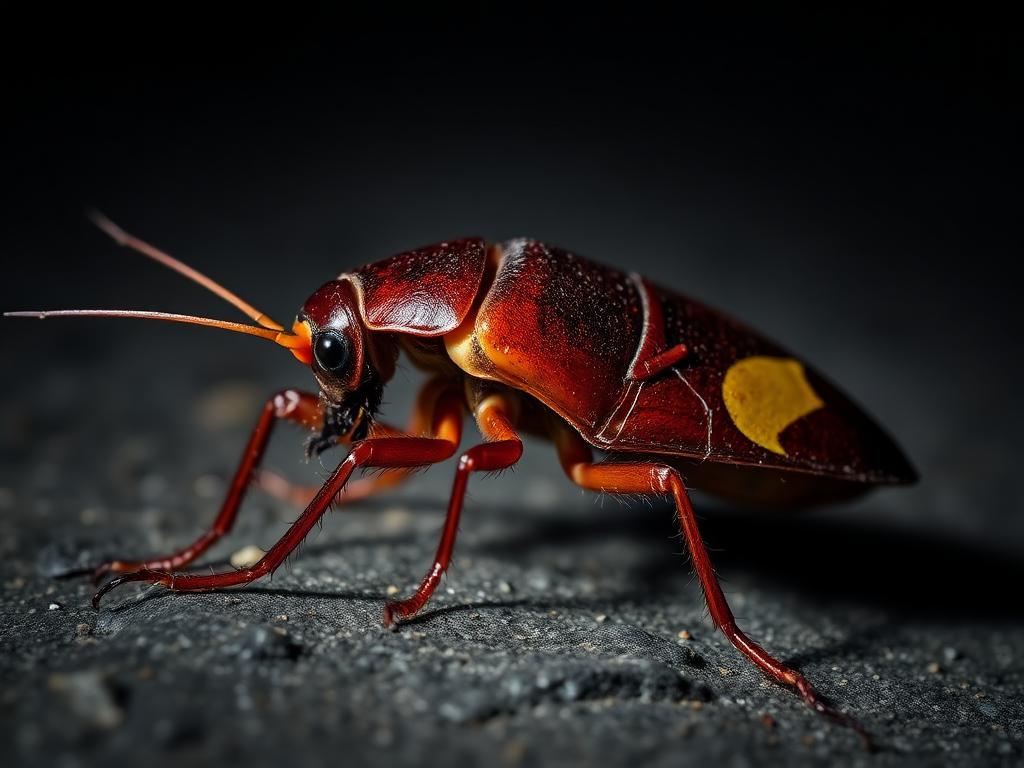
- Adult size
- 1.5" – 2"
- Color
- Reddish-brown, yellow halo
- Group size
- Hundreds
- Lifespan
- 1 – 2 years
Identifying it
Up to two inches, reddish-brown with a pale figure-eight marking behind the head. Usually seen singly, at night, in bathrooms, basements, and near floor drains.
Why Newport News sees this
They live in sewers, storm drains, and damp crawl spaces and enter through plumbing penetrations and defective sewer lines. Older municipal infrastructure across Norfolk and Portsmouth keeps populations high.
Early 20th-century frame housing in Hilton Village and the East End on crawl spaces; mid-century ranches through Denbigh; newer slab construction in Kiln Creek and Port Warwick.
James River frontage, ravine and creek systems cutting through neighborhoods, and a mix of sandy and clay soils with poor drainage in the older sections.
The American cockroach is the two-inch reddish-brown roach residents describe as flying up out of a floor drain or crawling out from under a washing machine at night. Unlike the German cockroach, this species does not build large indoor colonies inside cabinets — its home base is the sewer system, storm drains, and damp crawl spaces, and what people see indoors is usually a scout or two that has followed a plumbing penetration or a gap around a foundation vent into the living space.
American roach activity in Hampton Roads tracks moisture and temperature closely. Sightings typically increase in late spring and through summer as humidity rises and sewer and storm-drain populations grow, and again after heavy rain events when rising groundwater and tidal marsh flooding push roaches out of saturated crawl spaces and drain lines looking for drier ground — sometimes straight into a house. Fall brings a secondary push indoors as outdoor temperatures drop and roaches seek the stable warmth of a crawl space or basement. Winter sightings are less common but not rare, since sewer lines and heated crawl spaces stay warm enough to sustain activity even when outdoor temperatures fall, particularly in older Norfolk and Portsmouth neighborhoods with aging clay or cast-iron sewer infrastructure.
When american cockroach activity peaks
Crawl space and sewer driven — invasions spike in July and August heat.
July — activity index 100 / 100 (annual peak)
Does yours match? Interactive ID checklist
0 of 4 traits matched
Tick everything you can actually see.
Signs of american cockroach activity
- Large reddish-brown roaches seen singly at night in bathrooms, basements, or near floor drains.
- A musty, sewage-like odor in a low-traffic area such as a laundry room or crawl space access.
- Roaches appearing in sinks or tubs after entering through a dry drain trap.
- Dark, ridged egg cases (oothecae) found along baseboards near plumbing fixtures.
- Roach activity concentrated near a specific plumbing penetration, sump pit, or foundation vent.
- Increased sightings immediately following heavy rain or periods of high humidity.
American Cockroach threat profile
Structural risk
10/100
Damage to framing, floors and finishes
Health risk
70/100
Bites, stings, allergens and pathogens
Spread rate
55/100
How fast it multiplies once established
DIY difficulty
70/100
How reliably store products fail on it
Field notes: american cockroach you did not know
- Fact 01
Often called the palmetto bug here; it flies short distances and does it badly.
- Fact 02
It can run about three miles an hour — fifty body lengths per second.
- Fact 03
Most of them are living in your crawl space or the sewer lateral, not your kitchen.
How we remove it
Source treatment in the crawl space and drain lines, sealing plumbing penetrations, and moisture reduction. Treating the kitchen alone accomplishes nothing.
Routing City of Newport News daily, including Hilton Village, Denbigh, Kiln Creek, Port Warwick, City Center, Riverside.
The Guardex american cockroach treatment plan
01 · Crawl space and exterior inspection
We inspect the crawl space, foundation vents, sump area, and exterior perimeter for moisture, standing water, and access points, since this is almost always where the population originates. We also check interior drains and plumbing penetrations for entry gaps.
02 · Source treatment in the crawl space
We apply targeted treatment directly in the crawl space and along the foundation perimeter where the population is actually living, rather than limiting treatment to the room where a roach was spotted. This addresses the source rather than the symptom.
03 · Drain and plumbing penetration sealing
We seal gaps around pipe penetrations, install or repair drain covers, and address dry P-traps that give roaches an open path from the sewer into the house. This closes the specific route the roach used to get inside.
04 · Moisture correction recommendation
Where crawl space humidity or standing water is significant, we recommend vapor barrier installation, drainage correction, or encapsulation, since that moisture is what sustains the population long-term. Baiting and perimeter treatment suppress numbers while the underlying moisture problem persists.
Why store-bought products usually fail
Store-bought sprays applied to the bathroom or kitchen where a roach was seen do nothing to the actual population living in the crawl space or sewer line, so homeowners often report roaches for months despite repeated indoor treatments. Retail bait stations are not designed for crawl space or subgrade application and break down quickly in high humidity. Sealing a single visible gap without a full perimeter and crawl space inspection typically misses other entry points, since a structure with a vented crawl space over a high water table usually has multiple access routes. Correcting the moisture and sewer conditions this species depends on requires equipment and diagnostic steps — vapor barrier assessment, drain camera work in some cases — that fall outside a homeowner treatment approach entirely.
Prevention checklist
- Keep crawl space vents screened and in good repair to limit outdoor roach access.
- Run water in rarely used drains monthly to keep P-traps full and blocking sewer access.
- Address standing water or poor drainage around the foundation promptly, especially after heavy rain.
- Seal gaps around pipe penetrations where they pass through the foundation or subfloor.
- Consider crawl space encapsulation in homes with a persistently damp or vented crawl space.
- Have aging sewer laterals inspected if roach activity recurs despite repeated treatment.
American Cockroach questions we get asked
- Why do I keep seeing roaches even after spraying under the sink?
- American roaches live in the crawl space or sewer line, not under the sink, so spraying the spot where you saw one only kills that individual. The population keeps producing new scouts until the crawl space or drain access is treated and sealed at the source.
- Is this roach common in older Norfolk and Portsmouth homes?
- Yes, particularly in neighborhoods with aging sewer infrastructure and vented crawl spaces over the high water table typical of the coastal plain. It is one of the most frequent calls we get from older housing stock in both cities.
- How long does it take to resolve an American roach problem?
- Source treatment in the crawl space typically reduces sightings within one to two weeks, but full resolution depends on correcting the moisture or sewer defect feeding the population, which can take longer if encapsulation or plumbing repair is needed.
- Can this roach fly?
- Adults have wings and can glide short distances, especially in warm weather, which is why people sometimes describe one flying up out of a drain or off a wall. They are not strong fliers but can cover more distance than people expect.
- Does seeing one mean I have an infestation?
- Not always — a single sighting can be a wandering scout from outside. Repeated sightings, especially near drains or after rain, indicate an established population nearby that should be inspected rather than ignored.
Other pests in Newport News
- Eastern Subterranean Termite control in Newport News
- Formosan Subterranean Termite control in Newport News
- Powderpost Beetle control in Newport News
- Carpenter Ant control in Newport News
- Carpenter Bee control in Newport News
- Wood-Decay Fungus control in Newport News
- German Cockroach control in Newport News
- Oriental Cockroach control in Newport News
- Odorous House Ant control in Newport News
- Red Imported Fire Ant control in Newport News
- Norway Rat control in Newport News
- House Mouse control in Newport News
- Squirrel control in Newport News
- Camel Cricket control in Newport News
- Springtail control in Newport News
- Asian Tiger Mosquito control in Newport News
- Salt Marsh Mosquito control in Newport News
- Blacklegged (Deer) Tick control in Newport News
- Yellowjacket control in Newport News
- Bed Bug control in Newport News
- Brown Marmorated Stink Bug control in Newport News
American Cockroach nearby in Virginia Peninsula
American Cockroach problem in Newport News?
Tell us where you are finding them and how often. We will confirm the species and put a plan on the calendar.
Request an inspection