
Newport News, VA
Norway Rat Control in Newport News
Burrowing rat of dense older neighborhoods, alleys, and waterfronts. Constant WDI report volume from military turnover, subterranean termites in the older stock, crawl space moisture and decay in Hilton Village and the East End, roaches in dense multi-family, and rodent pressure near the shipyard corridor.
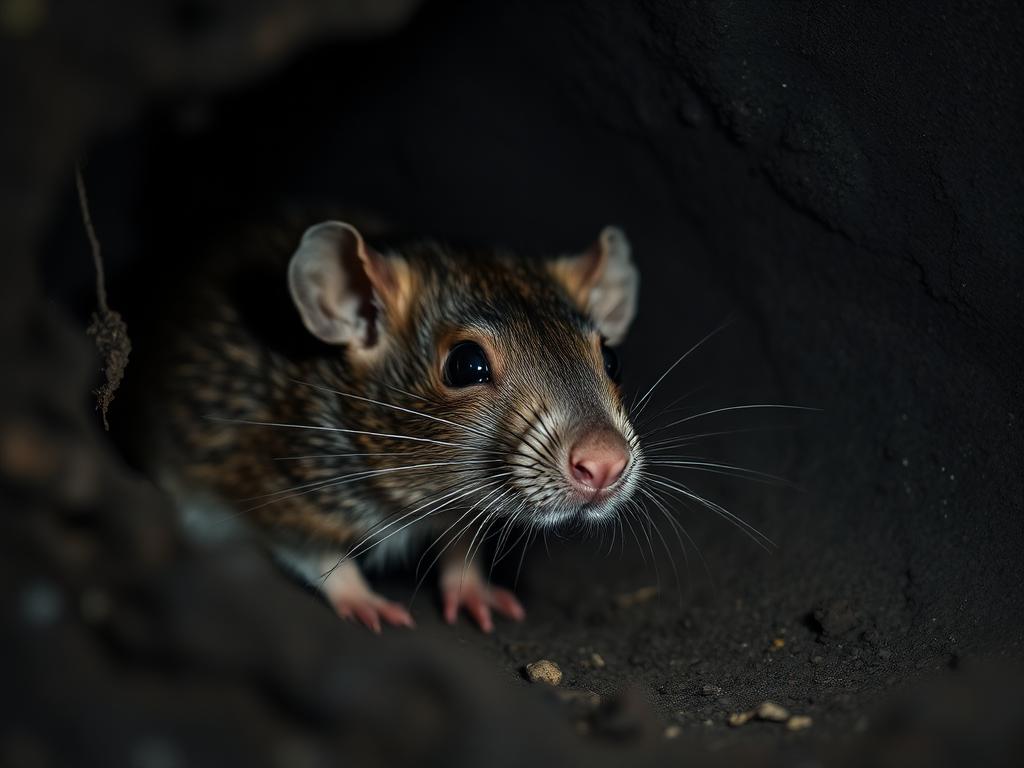
- Adult size
- 7" – 9.5" body
- Color
- Coarse brown-grey
- Group size
- Colonies of 15 – 60
- Lifespan
- About 1 year
Identifying it
Heavy-bodied brown rat with a blunt nose, small ears, and a tail shorter than its body. Burrows along foundations, under sheds, and in alleys; droppings are capsule-shaped.
Why Newport News sees this
Dense pre-war housing, alley infrastructure, port and waterfront activity, and mild winters sustain year-round populations in Norfolk and Portsmouth in particular.
Early 20th-century frame housing in Hilton Village and the East End on crawl spaces; mid-century ranches through Denbigh; newer slab construction in Kiln Creek and Port Warwick.
James River frontage, ravine and creek systems cutting through neighborhoods, and a mix of sandy and clay soils with poor drainage in the older sections.
The Norway rat is a ground-level burrower, and in Hampton Roads that means it lives where the soil is soft and the drainage is bad. Foundations along drainage ditches in Chesapeake and Suffolk, alley corridors in Norfolk and Portsmouth, and waterfront bulkheads in Poquoson and Smithfield all give this rat what it needs: a bank to dig into, cover close by, and a food source within a short run. A burrow entrance is usually a smooth, fist-sized hole tight against a foundation, shed base, or woodpile, often with a worn path leading to it.
Burrowing activity is visible year-round in this climate, but pressure peaks in two windows. Late summer through early fall, when yard vegetation is thickest and drainage ditches in Chesapeake and Suffolk are choked with growth, burrow density climbs along waterlines and property edges. The second window follows the first hard cold snap, usually November into December, when outdoor burrows are abandoned in favor of crawl spaces and garages, and gnaw damage and grease trails start appearing indoors. Heavy rain events, common during hurricane season, also flush burrows near tidal marsh and ditch banks and push rats toward higher, drier structures, which is a recurring call pattern for waterfront homes in Poquoson and Smithfield after a named storm.
When norway rat activity peaks
Pushes indoors hard when nights cool off — October through December.
November — activity index 95 / 100 (annual peak)
Does yours match? Interactive ID checklist
0 of 5 traits matched
Tick everything you can actually see.
Signs of norway rat activity
- Smooth, rounded burrow openings about two to three inches across at the base of a foundation, shed, or retaining wall.
- Capsule-shaped droppings roughly three-quarters of an inch long, found along runs and near food sources.
- Dark grease smudges on foundation walls, joists, or pipes where oily fur repeatedly brushes the same travel path.
- Gnaw marks on PVC pipe, wood framing, or electrical insulation inside a crawl space or garage.
- Fresh digging or disturbed mulch appearing overnight along a foundation line that was undisturbed the day before.
- Scratching or thumping sounds at night from beneath a floor, in a crawl space, or behind a low wall.
Norway Rat threat profile
Structural risk
75/100
Damage to framing, floors and finishes
Health risk
85/100
Bites, stings, allergens and pathogens
Spread rate
60/100
How fast it multiplies once established
DIY difficulty
85/100
How reliably store products fail on it
Field notes: norway rat you did not know
- Fact 01
Their incisors never stop growing, which is why they gnaw through lead sheeting and soft concrete.
- Fact 02
A rat can squeeze through an opening the size of a quarter.
- Fact 03
They are neophobic: new traps get ignored for days before they will touch them.
How we remove it
Trapping combined with permanent exclusion — sealing foundation gaps, screening crawl space vents, closing utility penetrations — plus harborage and food-source removal.
Routing City of Newport News daily, including Hilton Village, Denbigh, Kiln Creek, Port Warwick, City Center, Riverside.
The Guardex norway rat treatment plan
01 · Exterior and foundation inspection
We trace every active burrow, gnaw mark, and grease trail along the foundation, sheds, and waterline to map colony size and entry points before any trap or bait is placed. This step also identifies the specific gaps — utility penetrations, vent screens, slab cracks — that need permanent repair.
02 · Exclusion
Every entry point identified in the inspection is sealed with rodent-proof materials: galvanized hardware cloth at vents, mortar or steel wool with sealant at penetrations, and door sweeps where needed. This is done before or alongside trapping, because trapping without exclusion just clears the current colony for a new one to move in.
03 · Trapping and burrow treatment
Snap traps and, where appropriate, burrow-specific bait placement are set along confirmed runs rather than at random points in the yard. Traps are checked and reset on a defined visit schedule until activity stops for two consecutive checks.
04 · Sanitation correction and monitoring
We flag conditions that will re-attract rats — accessible pet food, fallen fruit, woodpiles against the foundation, overgrown ditch-line vegetation — and set a monitoring visit to confirm the burrow network has gone fully quiet before closing the job.
Why store-bought products usually fail
Store-bought bait stations and single traps almost always fail against an established Norway rat colony because they treat the symptom, not the burrow network. Rats are cautious around new objects and will route around a trap or station for days, and a colony with multiple burrow exits simply reroutes traffic if one entrance is disturbed. Bait alone, without exclusion, also risks a rat dying inside a wall or crawl space void, which creates an odor problem that is far more difficult to resolve than the original infestation. Sealing entry points correctly requires identifying every gap at grade level, not just the obvious ones, and matching the right material to masonry, wood, or vent openings — a mismatch (foam alone, for instance) is chewed through in a matter of days.
Prevention checklist
- Keep mulch and dense groundcover pulled back at least twelve inches from the foundation so burrow starts are visible early.
- Screen crawl space vents with rodent-grade hardware cloth, not standard window screen.
- Store pet food, birdseed, and garbage in sealed containers rather than bags.
- Trim back shrubs and woodpiles that sit directly against exterior walls.
- Clear drainage ditches and low areas of standing debris that provide burrow cover along property lines.
- Repair cracked mortar, slab edges, and utility penetrations as soon as they appear.
Norway Rat questions we get asked
- How long does it take to clear a Norway rat colony from a property?
- Most single-family properties in Hampton Roads clear in two to four weeks with weekly trap checks, though a large waterfront burrow network along a ditch or bulkhead can take longer. Exclusion work is usually completed on the first visit; trapping continues until activity stops.
- Do you handle Norway rats in Chesapeake and Suffolk near drainage ditches?
- Yes, ditch-line and marsh-adjacent burrowing is one of the most common calls we get in Chesapeake and Suffolk. Those properties usually need both burrow treatment along the ditch bank and foundation exclusion at the house.
- Can I just use bait boxes myself instead of calling someone?
- Bait alone without sealing entry points tends to relocate the problem rather than end it, and it carries a real risk of a rat dying inside a wall void. We recommend bait only as one part of a combined exclusion-and-trapping plan.
- Will sealing my crawl space vents actually stop rats?
- It stops one of the most common entry routes, but only if it's paired with sealing foundation cracks, utility gaps, and door thresholds. A single unscreened vent can undo the rest of the exclusion work.
- What does a Norway rat treatment cost?
- Cost depends on the number of active burrows, the length of foundation needing exclusion, and how many follow-up visits are required. We provide a fixed quote after the initial inspection rather than a phone estimate.
Other pests in Newport News
- Eastern Subterranean Termite control in Newport News
- Formosan Subterranean Termite control in Newport News
- Powderpost Beetle control in Newport News
- Carpenter Ant control in Newport News
- Carpenter Bee control in Newport News
- Wood-Decay Fungus control in Newport News
- German Cockroach control in Newport News
- American Cockroach control in Newport News
- Oriental Cockroach control in Newport News
- Odorous House Ant control in Newport News
- Red Imported Fire Ant control in Newport News
- House Mouse control in Newport News
- Squirrel control in Newport News
- Camel Cricket control in Newport News
- Springtail control in Newport News
- Asian Tiger Mosquito control in Newport News
- Salt Marsh Mosquito control in Newport News
- Blacklegged (Deer) Tick control in Newport News
- Yellowjacket control in Newport News
- Bed Bug control in Newport News
- Brown Marmorated Stink Bug control in Newport News
Norway Rat nearby in Virginia Peninsula
Norway Rat problem in Newport News?
Tell us where you are finding them and how often. We will confirm the species and put a plan on the calendar.
Request an inspection