
Smithfield, VA
House Mouse Control in Smithfield
Fits through a gap the width of a pencil, breeds year-round indoors. Powderpost beetles and old house borer in aged framing, subterranean termites, crawl space decay fungus, and rodent activity around the older commercial blocks.
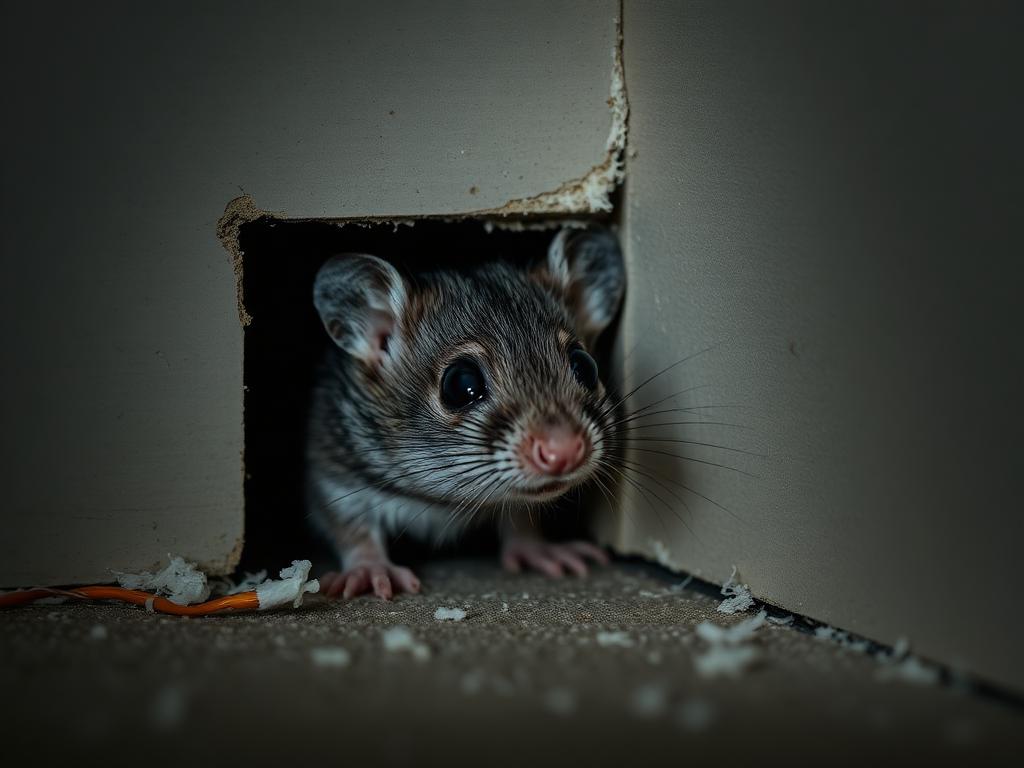
- Adult size
- 2.5" – 4" body
- Color
- Dusty grey, cream belly
- Group size
- Dozens quickly
- Lifespan
- 9 – 12 months
Identifying it
Small grayish-brown rodent with a pointed nose and a tail about the length of its body. Rice-grain droppings in cabinets, drawers, and along walls.
Why Smithfield sees this
Enters through crawl space vents, utility penetrations, and garage thresholds, especially during the first cold snap each fall.
18th- and 19th-century frame houses in the historic district on shallow crawl spaces, alongside newer slab construction in the surrounding developments.
Pagan River frontage, tidal creeks, and a mix of agricultural and hydric soils. Historic structures sit close to grade with limited original drainage.
The house mouse is the rodent most likely to be living inside a Hampton Roads home right now without anyone having seen one yet. It fits through a gap the width of a pencil, which means garage door thresholds, utility penetrations, and the narrow space around a dryer vent are all viable entry points that a homeowner would never think to check. Unlike rats, mice don't need much outdoor pressure to establish indoors — a handful of mice getting into a kitchen or pantry in early fall can become a self-sustaining indoor population by winter.
Entry pressure spikes with the first sustained cold snap each fall, typically late October through November in this region, as outdoor mice seek warmth and stable food access. Once inside, breeding continues through winter regardless of outdoor temperature, so a population that enters in November can be fully established by the time spring arrives. A secondary, smaller entry period occurs in late summer during dry stretches when outdoor food and water sources are scarcer. Homes with garages, detached structures, or older weatherstripping see pressure nearly year-round rather than in a single defined season.
When house mouse activity peaks
The classic fall invader — pressure peaks in November.
November — activity index 100 / 100 (annual peak)
Does yours match? Interactive ID checklist
0 of 4 traits matched
Tick everything you can actually see.
Signs of house mouse activity
- Rice-grain-sized droppings concentrated in drawers, cabinet corners, or along baseboards.
- A stale, ammonia-like odor in an enclosed space such as a pantry or under-sink cabinet.
- Gnawed corners on cardboard boxes, food packaging, or plastic containers.
- Small, dark grease marks along baseboards or in corners where mice repeatedly travel the same route.
- Scratching sounds inside walls or above ceilings, especially at night.
- Shredded paper, fabric, or insulation gathered into a small nest inside a drawer, cabinet, or wall void.
House Mouse threat profile
Structural risk
45/100
Damage to framing, floors and finishes
Health risk
70/100
Bites, stings, allergens and pathogens
Spread rate
80/100
How fast it multiplies once established
DIY difficulty
70/100
How reliably store products fail on it
Field notes: house mouse you did not know
- Fact 01
A mouse fits through a hole the width of a pencil.
- Fact 02
They leave 50 to 75 droppings a day and dribble urine as they travel.
- Fact 03
A single female can produce up to ten litters a year.
How we remove it
Trapping paired with exclusion of every gap wider than a quarter inch, plus removal of nesting material and food access.
Routing Town of Smithfield daily, including Historic District, Cypress Creek, Gatling Pointe, Moonefield, Wellington Estates.
The Guardex house mouse treatment plan
01 · Interior and exterior inspection
We trace droppings, gnaw marks, and grease trails to identify active zones inside the home, then check the full exterior for gaps at utility lines, thresholds, and vents that match the interior sign.
02 · Exclusion of quarter-inch-and-larger gaps
Every gap a mouse could realistically use — door thresholds, dryer vents, utility penetrations, foundation cracks — is sealed with durable materials matched to the surface. This step is what actually prevents reinfestation.
03 · Interior trapping
Traps are placed along confirmed indoor travel routes rather than randomly, and checked on a set schedule until activity stops for two consecutive visits.
04 · Sanitation review and follow-up
We flag accessible food sources, cluttered storage areas that provide nesting cover, and any gaps that reopen, then schedule a follow-up check to confirm the population is fully cleared.
Why store-bought products usually fail
Retail snap traps and glue boards can catch individual mice, but house mice breed fast enough that trapping without sealing entry points is usually a losing race against reproduction. Because mice range only a short distance from the nest, misplaced traps in the wrong room can go untouched for weeks while activity continues nearby. Sealing every viable gap requires a systematic exterior walk-through most homeowners don't have time to do thoroughly, and missing even one entry point — a single unscreened dryer vent, for example — can undo the rest of the effort.
Prevention checklist
- Install door sweeps on exterior doors, especially garage and utility doors.
- Seal gaps around dryer vents, gas lines, and cable entry points with steel wool and sealant.
- Store dry food in sealed hard containers rather than original cardboard packaging.
- Reduce clutter in garages, basements, and storage rooms that provides nesting cover.
- Keep vegetation and firewood pulled back from the foundation and exterior walls.
- Inspect weatherstripping annually and replace it once it compresses or cracks.
House Mouse questions we get asked
- How fast can a house mouse problem get out of control?
- A pair of mice entering in early fall can produce dozens of offspring by winter given consistent food and shelter. That's why we recommend addressing signs at first appearance rather than waiting to see if it gets worse.
- Do you see a lot of house mouse calls in Hampton and Newport News?
- Yes, especially in older housing stock with original weatherstripping and foundation settling. It's one of the most common calls we get across the Peninsula in fall and winter.
- Can mice really fit through such a small gap?
- Yes, a house mouse can squeeze through an opening about the width of a pencil, roughly a quarter inch. That's why exclusion work has to check every gap, not just the obvious ones.
- How long does treatment take?
- Most interior populations clear within two to three weeks of trapping combined with exclusion. Homes with extensive entry points or clutter-heavy storage areas can take a bit longer.
- What's the cost difference between a quick trapping visit and a full program?
- A single trapping visit without exclusion is cheaper up front but rarely solves the problem long-term. A full program including sealing typically costs more initially but prevents the recurring service calls that add up otherwise.
Other pests in Smithfield
- Eastern Subterranean Termite control in Smithfield
- Formosan Subterranean Termite control in Smithfield
- Powderpost Beetle control in Smithfield
- Carpenter Ant control in Smithfield
- Carpenter Bee control in Smithfield
- Wood-Decay Fungus control in Smithfield
- German Cockroach control in Smithfield
- American Cockroach control in Smithfield
- Oriental Cockroach control in Smithfield
- Odorous House Ant control in Smithfield
- Red Imported Fire Ant control in Smithfield
- Norway Rat control in Smithfield
- Squirrel control in Smithfield
- Camel Cricket control in Smithfield
- Springtail control in Smithfield
- Asian Tiger Mosquito control in Smithfield
- Salt Marsh Mosquito control in Smithfield
- Blacklegged (Deer) Tick control in Smithfield
- Yellowjacket control in Smithfield
- Bed Bug control in Smithfield
- Brown Marmorated Stink Bug control in Smithfield
House Mouse nearby in Isle of Wight
House Mouse problem in Smithfield?
Tell us where you are finding them and how often. We will confirm the species and put a plan on the calendar.
Request an inspection