
Smithfield, VA
Oriental Cockroach Control in Smithfield
Glossy near-black roach — a direct indicator of crawl space moisture. Powderpost beetles and old house borer in aged framing, subterranean termites, crawl space decay fungus, and rodent activity around the older commercial blocks.
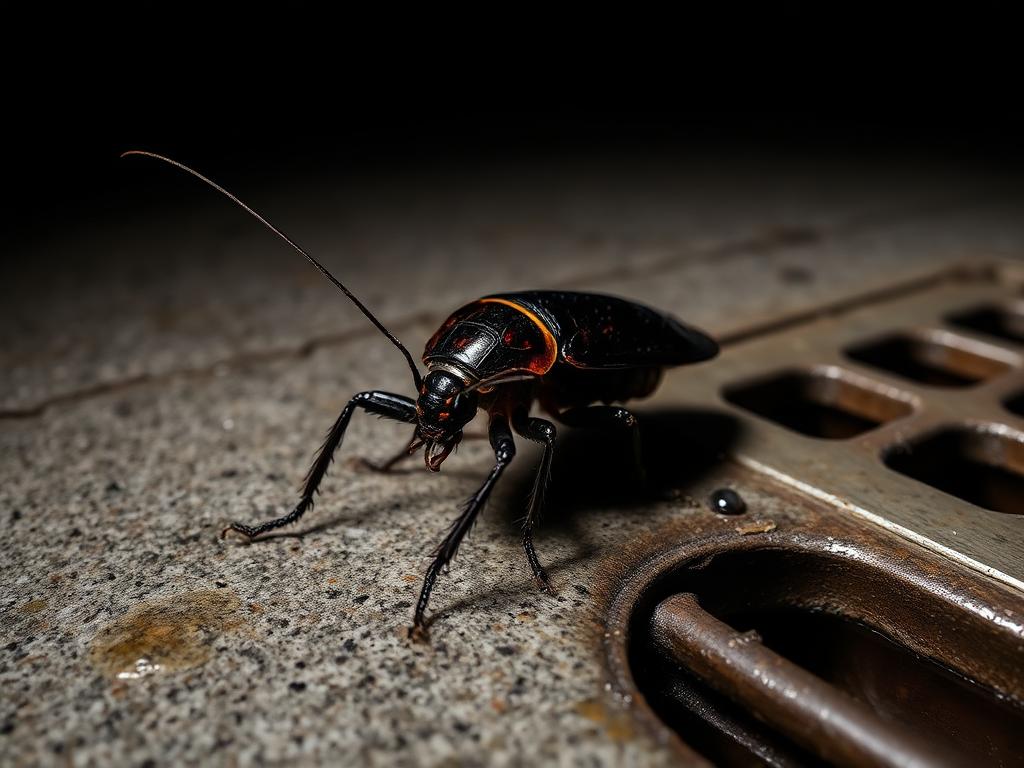
- Adult size
- 1" – 1.25"
- Color
- Glossy near-black
- Group size
- Dozens to hundreds
- Lifespan
- About 6 months
Identifying it
About an inch, very dark and glossy, slow-moving. Females have short wing pads and cannot fly. Found low — crawl spaces, floor level, under sinks, around drains.
Why Smithfield sees this
They require consistently damp harborage. Their presence indoors is a reliable signal that the crawl space is holding water or humidity well above range.
18th- and 19th-century frame houses in the historic district on shallow crawl spaces, alongside newer slab construction in the surrounding developments.
Pagan River frontage, tidal creeks, and a mix of agricultural and hydric soils. Historic structures sit close to grade with limited original drainage.
The oriental cockroach is the dark, glossy, slow-moving roach residents most often find in a crawl space, a basement corner, or low around a floor drain rather than scurrying across a countertop. Unlike German or American roaches, this species has a low tolerance for dry conditions and cannot survive without consistently damp harborage, which makes it one of the most reliable indicator species we use in Hampton Roads for diagnosing a crawl space moisture problem.
Oriental roach activity in Hampton Roads follows the region's humidity calendar closely, with sightings rising through the humid summer months as crawl space moisture and outdoor harborage both peak. Activity also increases noticeably after heavy rain, when rising water tables and saturated soil around foundations push roaches toward drier interior spaces, including up through foundation gaps and around sump areas. Cooler, drier stretches in fall and winter typically reduce sightings, though a chronically wet crawl space can sustain low-level activity through the winter as well, since the space stays more humid than the outdoor air regardless of season. Because their presence depends on standing moisture rather than temperature alone, oriental roach pressure correlates more closely with a home's crawl space condition than with the time of year.
When oriental cockroach activity peaks
Wet-season species; worst after heavy summer rain floods the crawl space.
July — activity index 95 / 100 (annual peak)
Does yours match? Interactive ID checklist
0 of 4 traits matched
Tick everything you can actually see.
Signs of oriental cockroach activity
- Large, dark, glossy roaches moving slowly at floor level, often in a basement, crawl space access, or under a sink.
- A strong musty or damp odor accompanying sightings, consistent with the moist harborage the species requires.
- Roaches found dead or sluggish on cool tile or concrete, since they tolerate dryness poorly.
- Activity concentrated near floor drains, sump pits, or low points where water collects.
- Visible moisture, condensation, or standing water in the crawl space during an inspection.
- Egg cases found in damp, undisturbed corners such as behind stored boxes in a basement.
Oriental Cockroach threat profile
Structural risk
10/100
Damage to framing, floors and finishes
Health risk
65/100
Bites, stings, allergens and pathogens
Spread rate
45/100
How fast it multiplies once established
DIY difficulty
70/100
How reliably store products fail on it
Field notes: oriental cockroach you did not know
- Fact 01
Nicknamed the water bug because it lives where standing water does.
- Fact 02
It gives off the strongest odor of any roach found in Virginia homes.
- Fact 03
Adults cannot fly and struggle to climb smooth vertical surfaces.
How we remove it
Crawl space moisture correction is the actual treatment. Baiting and perimeter work suppress the population while encapsulation and drainage remove the habitat.
Routing Town of Smithfield daily, including Historic District, Cypress Creek, Gatling Pointe, Moonefield, Wellington Estates.
The Guardex oriental cockroach treatment plan
01 · Crawl space moisture inspection
We assess the crawl space for standing water, vapor barrier condition, ventilation, and humidity levels, since this is the root cause in nearly every oriental roach case we see. We document conditions with photos for the homeowner.
02 · Baiting and perimeter suppression
We apply bait and perimeter treatment to knock down the existing population and prevent movement into living space while the moisture correction is planned or completed. This step controls the immediate problem without pretending to fix the cause.
03 · Moisture correction plan
Depending on findings, we recommend vapor barrier installation, drainage correction, dehumidification, or full encapsulation. This is the step that actually removes the habitat the species depends on rather than just suppressing numbers.
04 · Follow-up verification
After moisture correction is completed, we return to confirm activity has stopped and the crawl space humidity is holding in an acceptable range. This closes the loop between pest control and the structural fix.
Why store-bought products usually fail
Retail sprays and baits can reduce visible oriental roach numbers temporarily but do nothing to address the crawl space moisture that is the actual cause, so sightings typically return within weeks. Homeowners rarely have the tools or experience to accurately assess crawl space humidity, vapor barrier condition, or drainage patterns, which means the real problem often goes undiagnosed even after a DIY treatment appears to work short-term. Encapsulation and drainage correction, the interventions that actually resolve this species long-term, require specialized materials and grading work well outside typical homeowner capability, and attempting a partial fix — laying plastic sheeting without addressing the water source, for instance — can trap moisture and make conditions worse.
Prevention checklist
- Keep crawl space vapor barriers intact and free of tears or gaps.
- Direct downspouts and grade the yard away from the foundation to reduce water intrusion.
- Address any standing water in the crawl space or basement promptly rather than letting it dry naturally.
- Screen and maintain crawl space vents to limit outdoor moisture and roach entry.
- Run a dehumidifier in chronically damp basements or crawl spaces during humid months.
- Schedule a crawl space inspection if you notice a musty odor even without visible roach activity.
Oriental Cockroach questions we get asked
- Why do I only see these roaches in my basement or crawl space access?
- Oriental roaches cannot survive dry conditions and stay close to the damp harborage they need, so they concentrate at floor level near moisture sources rather than spreading through the house the way German roaches do.
- Does this mean I have a serious moisture problem?
- It usually means moisture levels in the crawl space or basement are elevated enough to sustain this species, which is worth addressing regardless of the roaches, since the same conditions support wood decay and other moisture-driven pests.
- Is this species common in Hampton, Portsmouth, and Smithfield?
- Yes — older housing stock with vented, unencapsulated crawl spaces over the region's high water table and sandy soils is exactly the condition this species needs, and it is one of the more common crawl space finds in those areas.
- Will treatment alone fix the problem?
- Baiting and perimeter treatment reduce the population, but full resolution requires correcting the crawl space moisture. Treatment without moisture correction typically sees activity return within a season.
- How long does moisture correction and roach elimination take together?
- Suppression treatment shows results within one to two weeks, but the full timeline depends on the moisture correction scope — a vapor barrier repair might take a day, while full encapsulation can take longer to schedule and complete.
Other pests in Smithfield
- Eastern Subterranean Termite control in Smithfield
- Formosan Subterranean Termite control in Smithfield
- Powderpost Beetle control in Smithfield
- Carpenter Ant control in Smithfield
- Carpenter Bee control in Smithfield
- Wood-Decay Fungus control in Smithfield
- German Cockroach control in Smithfield
- American Cockroach control in Smithfield
- Odorous House Ant control in Smithfield
- Red Imported Fire Ant control in Smithfield
- Norway Rat control in Smithfield
- House Mouse control in Smithfield
- Squirrel control in Smithfield
- Camel Cricket control in Smithfield
- Springtail control in Smithfield
- Asian Tiger Mosquito control in Smithfield
- Salt Marsh Mosquito control in Smithfield
- Blacklegged (Deer) Tick control in Smithfield
- Yellowjacket control in Smithfield
- Bed Bug control in Smithfield
- Brown Marmorated Stink Bug control in Smithfield
Oriental Cockroach nearby in Isle of Wight
Oriental Cockroach problem in Smithfield?
Tell us where you are finding them and how often. We will confirm the species and put a plan on the calendar.
Request an inspection