
Occasional invaders
Brown Marmorated Stink Bug Control in Hampton Roads
Fall migration into attics, window frames, and wall voids.
Halyomorpha halys
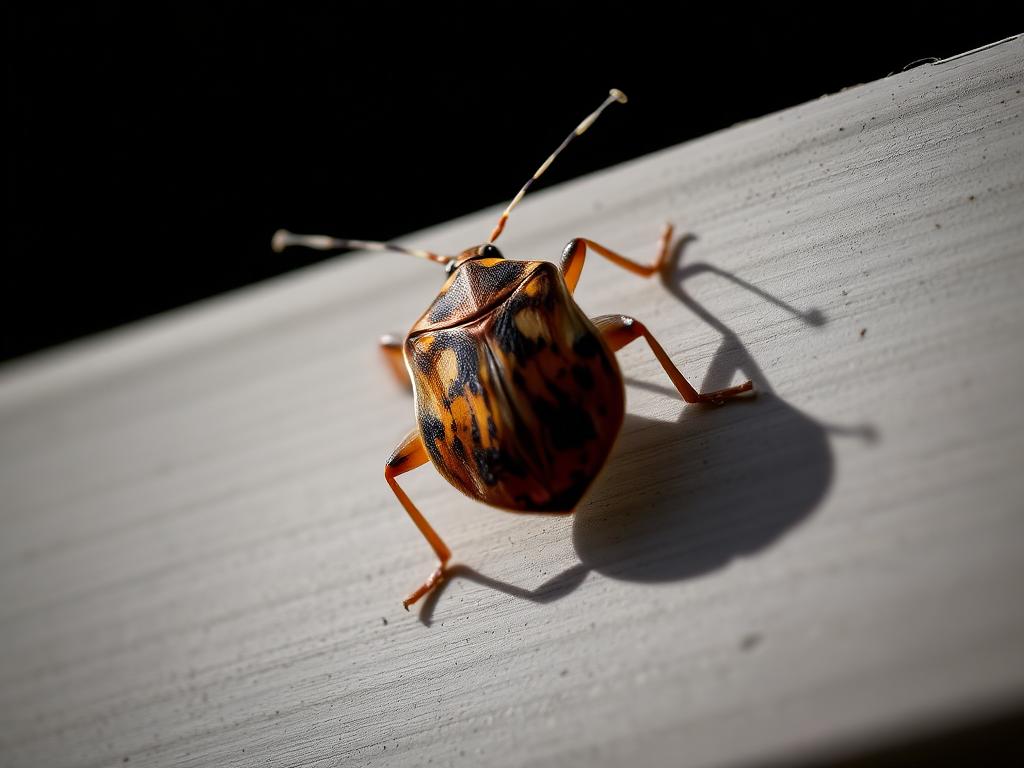
- Adult size
- 5/8", shield shaped
- Color
- Mottled brown, banded antennae
- Group size
- Hundreds overwintering
- Lifespan
- 6 – 8 months
Brown marmorated stink bugs do not breed indoors and do not damage structures. What they do is congregate on the sun-warmed south and west walls of homes across Virginia Beach, Chesapeake, and Suffolk every September and October, then push through any gap they can find to spend winter in the wall void, attic, or soffit above your head. A single sunny wall can pull in hundreds of individuals over a few weeks, and most homeowners never see the buildup happening outside because it starts at dusk.
The problem shows up twice: once in fall when they're stacking up on siding and window screens looking for a way in, and again in late winter or on the first warm days of February and March, when the ones that made it inside wake up and wander into living space through recessed lighting, outlet covers, and closet ceilings. Isle of Wight County and western Suffolk see the heaviest pressure because the adjacent soybean and cotton fields are a primary host, but the bug is now established in every Hampton Roads city.
Guardex treats this as a migration-timing problem, not a general pest control problem. The window to intercept them is narrow, roughly two to four weeks in early fall before the population has already worked its way inside, and a treatment applied after that window mostly kills bugs that were already going to die on their own, without stopping the ones now overwintering in your walls.
How to identify brown marmorated stink bug
Shield-shaped mottled brown bug about three-quarters of an inch with banded antennae. Congregates on sunny exterior walls in autumn before moving inside.
When brown marmorated stink bug activity peaks
They pile onto sunny walls and push inside during the first cool snaps of October.
October — activity index 100 / 100 (annual peak)
Brown Marmorated Stink Bug biology and life cycle
Adults overwinter in wall voids, attics, and other protected dry spaces, emerging in spring to feed and lay clusters of pale eggs on the underside of host plant leaves through summer. Hampton Roads typically sees one full generation per year, with nymphs passing through five stages before reaching adulthood by late summer. It's this new adult generation, mixed with any survivors, that stages the fall migration back toward structures. Adults can live close to a year, which is why a single mild winter with poor exclusion produces visible activity again the following February. Populations build cumulatively on properties that back up to agricultural fields or wooded treelines, since the same structure gets re-colonized every year unless the entry points found the previous fall are actually sealed rather than just treated.
When brown marmorated stink bug pressure peaks in Hampton Roads
Pressure is lowest from May through July, when the population is dispersed across crops and vegetation. It builds sharply from late August through October as field crops in Suffolk and Isle of Wight County are harvested and adults search for overwintering sites, with peak wall-congregation days following any stretch of cooling nights after a warm afternoon. Indoor sightings drop off through December as bugs settle into voids, then spike again on the first 60-degree days of late February through March when dormant adults are triggered to move, often ending up in bedrooms and bathrooms on upper floors nearest the roofline.
Brown Marmorated Stink Bug threat profile
Structural risk
5/100
Damage to framing, floors and finishes
Health risk
5/100
Bites, stings, allergens and pathogens
Spread rate
60/100
How fast it multiplies once established
DIY difficulty
65/100
How reliably store products fail on it
Does yours match? Interactive ID checklist
0 of 4 traits matched
Tick everything you can actually see.
Why it is in your house
Agricultural fields across Suffolk, Isle of Wight County, and southern Chesapeake produce large populations that migrate to structures each fall.
Field notes: brown marmorated stink bug you did not know
- Fact 01
Vacuuming them can leave your vacuum smelling for weeks — use a disposable bag.
- Fact 02
They aggregate by pheromone, so last year's cluster tells them where to return.
- Fact 03
They are a major agricultural pest of Virginia orchards and soybeans.
Signs of brown marmorated stink bug activity
- Clusters of shield-shaped bugs sunning themselves on white or light-colored siding in the afternoon in September and October.
- Bugs collecting at window and door frames, particularly on the south and west sides of the house.
- A sharp, cilantro-like odor when a bug is crushed or disturbed near curtains and blinds.
- Live or dead bugs appearing on interior windowsills and around recessed lighting during warm spells in late winter.
- Accumulations in attic insulation or behind soffit vents found during unrelated attic work.
- Scattered individual bugs wandering across ceilings and upper walls on unseasonably warm days from February through April.
What brown marmorated stink bug activity costs you
The stink bug itself poses no bite, sting, or disease risk to people or pets, and it does not reproduce indoors or feed on wood, fabric, or stored food. The real cost is the sheer volume: an untreated wall can harbor several hundred overwintering adults, and when a portion of them wake up on a warm February afternoon, they can emerge into living space over several days in numbers that are unpleasant to manage one at a time. Crushing them releases a persistent odor that can linger in carpet and fabric. For homes bordering active farmland in Isle of Wight County or western Suffolk, the pressure repeats every single fall regardless of how thoroughly a given year's population was managed, since new adults migrate in from the surrounding fields.
What actually removes it
Exterior perimeter treatment timed to the fall migration, plus sealing of gaps at windows, soffits, and utility penetrations before they enter.
Quarterly Pest ControlThe Guardex brown marmorated stink bug treatment plan
01 · Fall exclusion inspection
A technician walks the exterior identifying gaps at soffits, fascia, window and door trim, and utility penetrations before the migration peaks. These are the specific points bugs will use to get from the wall surface into the void.
02 · Timed perimeter application
An exterior residual treatment is applied to siding, eaves, and foundation walls in the two-to-four-week window when adults are actively staging on the structure, not after they've already moved in. This is the single most time-sensitive step in the plan.
03 · Gap sealing
Accessible gaps identified in the inspection are sealed or flagged for repair, closing off the entry points that let this year's population and next year's re-migration reach the wall void.
04 · Late-winter follow-up
A late February or March check addresses any bugs already overwintering inside, using targeted treatment in attics and void spaces where large clusters are confirmed, reducing the spring indoor emergence.
Why store-bought products usually fail
Store-bought aerosol sprays kill the bugs they directly contact but do nothing about the hundreds more still arriving on the wall behind the siding, and they offer zero residual protection once the can is empty. Foggers and bug bombs don't reach wall voids or attic spaces where the real population is hiding, and homeowners who seal gaps without treating the exterior often find bugs simply working harder to find the next opening. The timing is the hardest part to get right without professional experience: treat too early and the residual has broken down before the real migration hits; treat too late and the population is already inside the structure where perimeter sprays can't reach them. Vacuuming up indoor stragglers works for the winter but does nothing to prevent the following fall's migration.
Prevention checklist
- Seal gaps around window and door frames, especially on south- and west-facing walls that receive full afternoon sun.
- Repair or replace damaged screens on attic and soffit vents.
- Caulk utility penetrations for cable, gas, and dryer vents where they meet siding.
- Replace worn weatherstripping on exterior doors before fall migration season.
- Keep exterior lighting off or minimized on peak migration evenings, since light attracts staging adults.
- Schedule exterior treatment before the migration window rather than after bugs are already visible indoors.
Where brown marmorated stink bug pressure runs highest
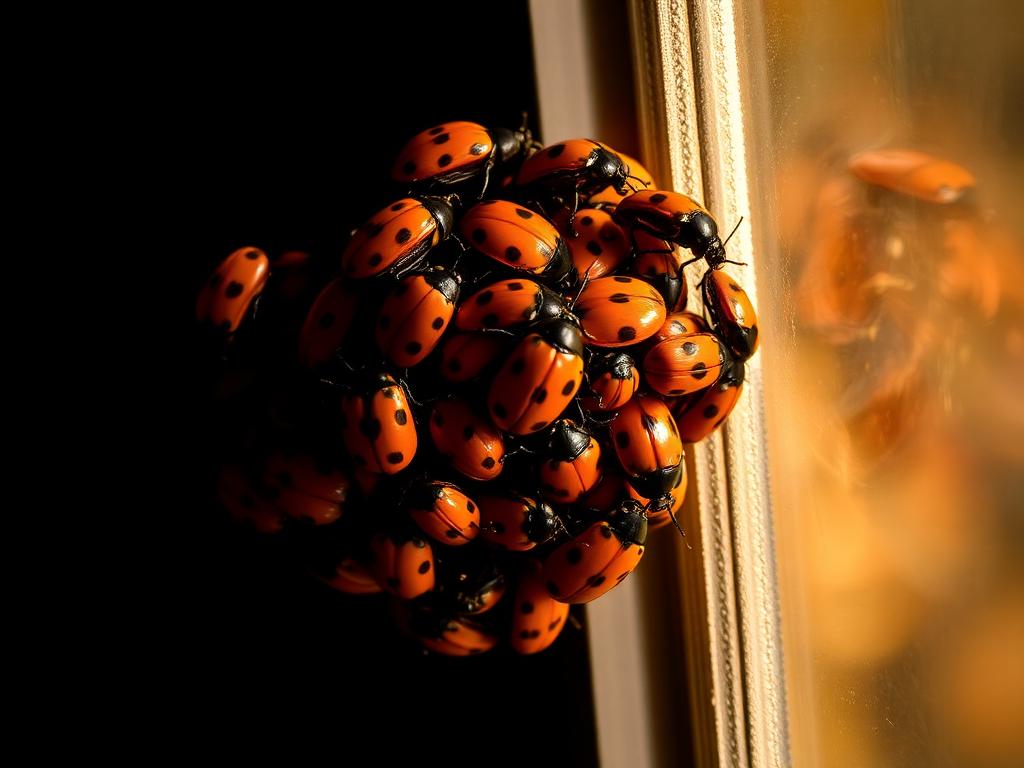
Commonly mistaken for brown marmorated stink bug
Brown Marmorated Stink Bug questions we get asked
- Are brown marmorated stink bugs dangerous to my family or pets?
- No. They don't bite, sting, or carry disease, and they can't reproduce indoors. The issue is nuisance volume and the odor released when they're crushed, not a health risk.
- Why do I get so many more than my neighbor?
- Sun exposure and proximity to farmland matter most. South- and west-facing walls that heat up in the afternoon draw far more staging adults, and homes near Suffolk or Isle of Wight County fields see heavier fall migrations.
- When should I schedule treatment?
- Early-to-mid September, before the peak fall migration into Hampton Roads structures. Treating after bugs are already visible on interior windowsills means most of the population has already found its way in.
- Is this a problem in Chesapeake and Virginia Beach, or just near farmland?
- It's established citywide at this point, though pressure is heaviest near agricultural edges in Suffolk, Isle of Wight County, and southern Chesapeake. Virginia Beach and Norfolk homes see it too, just typically in lower numbers.
- How long does one treatment last?
- A fall perimeter application provides residual protection through the several-week migration window, generally into October. Because adults can survive the winter indoors, most properties benefit from a late-winter follow-up rather than a single annual visit.
Brown Marmorated Stink Bug control by city and county
- Brown Marmorated Stink Bug control in Virginia Beach, VA
- Brown Marmorated Stink Bug control in Chesapeake, VA
- Brown Marmorated Stink Bug control in Norfolk, VA
- Brown Marmorated Stink Bug control in Portsmouth, VA
- Brown Marmorated Stink Bug control in Suffolk, VA
- Brown Marmorated Stink Bug control in Newport News, VA
- Brown Marmorated Stink Bug control in Hampton, VA
- Brown Marmorated Stink Bug control in Poquoson, VA
- Brown Marmorated Stink Bug control in Smithfield, VA
- Brown Marmorated Stink Bug control in Isle of Wight County, VA
- Brown Marmorated Stink Bug control in Carrollton, VA
Services that handle brown marmorated stink bug problems
- Cockroach ControlGerman roach elimination indoors, American and oriental roach control at the source.
- Ant ControlSpecies-specific baiting for odorous house, Argentine, pavement, and fire ants.
- Rodent Control & ExclusionTrapping paired with physical exclusion so they cannot come back.
- Mosquito & Tick ControlYard programs targeting harborage and standing-water breeding sites.
- Bed Bug TreatmentInspection-driven treatment programs with confirmation follow-ups.
- Wildlife ExclusionSquirrel, raccoon, opossum, and bat removal with permanent structural sealing.
Further reading
- If you are seeing camel crickets indoors, the crawl space is the storyCamel crickets are an indicator species. Killing the ones you see does nothing about the condition that produced them.
- German roaches versus American roaches: two completely different problemsOne is an indoor harborage and sanitation issue. The other is usually a crawl space, sewer, or moisture defect. Treating them the same wastes money.
Others in this category
Confirm the ID and get it handled
Send a photo and the location in the structure. A licensed technician will tell you the species and whether it needs a visit.
Request an inspection