
Occasional invaders
Millipede Control in Hampton Roads
Mass movement indoors after heavy rain, then dies on the floor.
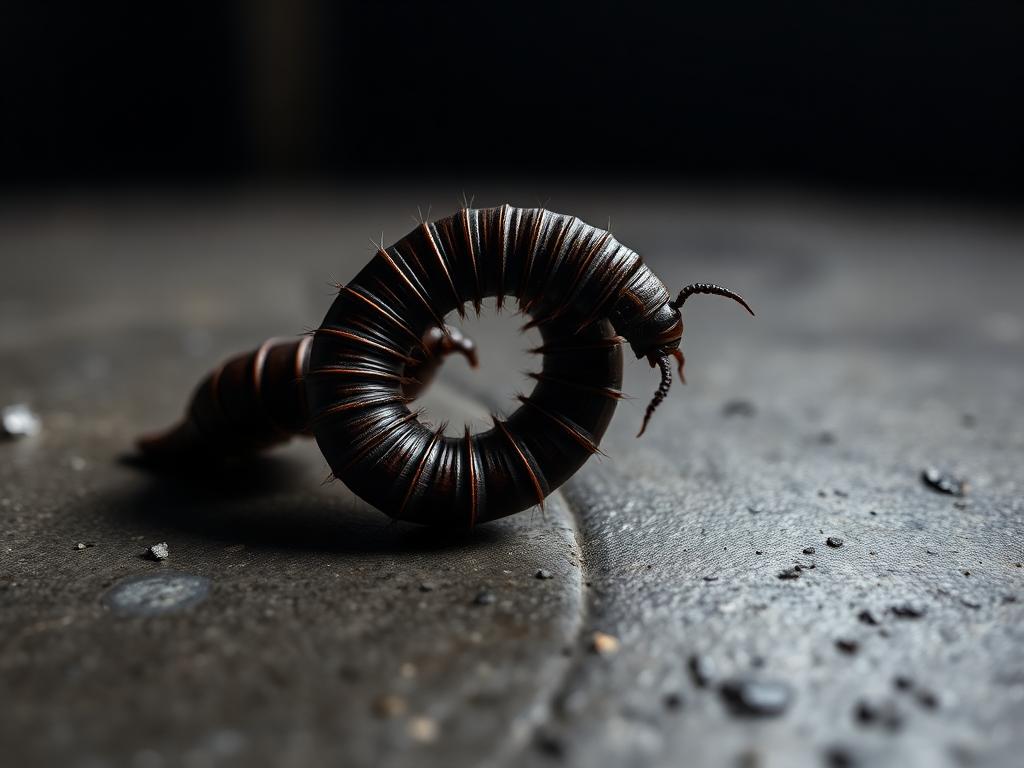
- Adult size
- 1" – 1.5"
- Color
- Brown to black, cylindrical
- Group size
- Mass migrations
- Lifespan
- 1 – 3 years
Millipedes are a moisture indicator that shows up as a mass-migration problem: after a heavy rain event saturates the soil, they leave mulch beds, leaf litter, and the soil beneath foundation shrubs in large numbers and move toward the nearest dry, elevated surface, which is often a home's foundation and, from there, its threshold gaps and vented crawl space openings. They don't bite, don't damage wood, and can't survive long indoors on dry flooring, but the volume during a wet week can mean dozens to hundreds found dead on a garage floor or entryway.
Hampton Roads' high water table makes this a near-annual event. Chesapeake, Suffolk, and Virginia Beach neighborhoods with heavy pine straw or mulch beds against the foundation, and properties with poorly draining clay soil, see the heaviest activity because the soil stays saturated longer after storms. Homes with vented crawl spaces are especially exposed, since the same gaps that ventilate the crawl space are wide enough for millipedes to pass through on their way toward higher ground.
Because the trigger is environmental rather than a colony to eliminate, the fix has two parts working together: correcting the moisture and mulch conditions that concentrate millipedes against the foundation, and sealing or treating the specific points where they cross from soil to structure. Treating the perimeter without addressing moisture just means next month's rain brings the same problem back.
How to identify millipede
Cylindrical segmented arthropod with two pairs of legs per segment; curls into a spiral when disturbed.
When millipede activity peaks
Mass migrations indoors after heavy spring rain and again in early fall.
September — activity index 90 / 100 (annual peak)
Millipede biology and life cycle
Millipedes develop slowly, molting through multiple stages over one to several years depending on species, and most Hampton Roads infestations involve garden millipedes that live in soil, mulch, and decaying organic matter feeding on plant debris rather than living structures. Adults can live two to five years, spending most of that life cycle outdoors in moist soil and only entering structures incidentally when conditions push them out of their normal habitat. Reproduction happens in the soil, with eggs laid in damp organic material, meaning a heavy population one year is often the result of favorable moisture and mulch conditions built up over multiple seasons rather than a single event. There is no indoor breeding population to eliminate; every millipede found inside a home is a wandering individual that entered from outside and will die within days without adequate moisture.
When millipede pressure peaks in Hampton Roads
Activity tracks rainfall more than temperature, with the sharpest spikes following the region's heavy spring and late-summer rain events, particularly after tropical moisture or multi-day soaking rains saturate clay soils. Late summer and early fall tend to produce the largest mass migrations in Hampton Roads as accumulated soil moisture from summer storms peaks. A secondary smaller pulse can occur in early spring as overwintering populations become active with the season's first warm rains. Dry stretches, even in peak summer, produce very little activity, which is why millipede complaints cluster tightly around specific rain events rather than spreading evenly across the season.
Millipede threat profile
Structural risk
0/100
Damage to framing, floors and finishes
Health risk
5/100
Bites, stings, allergens and pathogens
Spread rate
45/100
How fast it multiplies once established
DIY difficulty
50/100
How reliably store products fail on it
Does yours match? Interactive ID checklist
0 of 4 traits matched
Tick everything you can actually see.
Why it is in your house
Saturated soil after the region's heavy rain events drives them out of mulch and leaf litter and against foundations.
Field notes: millipede you did not know
- Fact 01
Two pairs of legs per body segment — centipedes have one.
- Fact 02
They curl into a tight coil when threatened and die that way indoors.
- Fact 03
They cannot survive inside; every one you find indoors is already dehydrating.
Signs of millipede activity
- Dozens to hundreds of millipedes found dead or dying on garage floors, patios, or entryways after a heavy rain.
- Live millipedes curling into a tight spiral when touched or disturbed near foundation walls.
- Millipede bodies accumulating in window wells and along the base of exterior doors.
- Visible trails of millipedes crossing driveways or walkways toward the house during or just after rain.
- Mulch beds pulled back from the foundation revealing dense millipede activity underneath.
- Musty odor near thresholds where crushed millipedes have accumulated over several days.
What millipede activity costs you
Millipedes present essentially no direct threat to people, pets, or the structure itself, they don't bite, sting, or feed on wood, and the defensive fluid some species release is only irritating with prolonged skin contact. The real cost is nuisance and the underlying moisture condition they reveal. A mass millipede event is a reliable sign that mulch is too deep, grading is directing water toward the foundation, or a vented crawl space is staying damp enough to draw them in, all conditions that, left unaddressed, also support wood-destroying organisms and moisture-related wood decay. In that sense a heavy millipede year is worth treating as a diagnostic flag for the property, not just a cleanup task.
What actually removes it
Reduce mulch depth and moisture against the foundation, seal thresholds and crawl space vents, and treat the exterior perimeter band.
Quarterly Pest ControlThe Guardex millipede treatment plan
01 · Moisture and grading assessment
A technician evaluates mulch depth, foundation grading, and crawl space vent condition to identify what's concentrating moisture against the structure, since this drives the migration in the first place.
02 · Mulch and moisture correction
Recommendations are made to pull mulch back from the foundation and improve drainage where standing water or saturated soil is found against the slab or crawl space wall.
03 · Perimeter and threshold treatment
A residual barrier is applied around the foundation and at door thresholds, targeting the specific crossing points identified during inspection rather than a blanket yard treatment.
04 · Post-rain follow-up
Properties with a history of heavy activity are rechecked after the next significant rain event to confirm the barrier is holding and adjust treatment if a new crossing point has developed.
Why store-bought products usually fail
Sweeping up millipede bodies after a rain event addresses the visible symptom but not the moisture condition producing wave after wave of them, so the same cleanup repeats after every heavy rain through the season. Retail perimeter sprays applied without correcting mulch depth or grading tend to wash out or break down quickly in the same wet conditions that trigger the migration, meaning homeowners often end up reapplying after every storm with diminishing results. Because the source population lives in soil and mulch rather than inside the structure, indoor treatment alone never resolves anything, millipedes found indoors are already dying and the next wave is still outside waiting for the next rain.
Prevention checklist
- Keep mulch and pine straw pulled back several inches from the foundation, especially on shaded or poorly draining sides of the house.
- Regrade areas where water pools against the foundation after rain.
- Ensure crawl space vents are properly screened and not damaged or missing.
- Clear leaf litter and organic debris away from the base of exterior walls.
- Seal gaps under exterior doors and at low foundation penetrations.
- Improve gutter drainage so downspouts direct water away from foundation planting beds.
Where millipede pressure runs highest
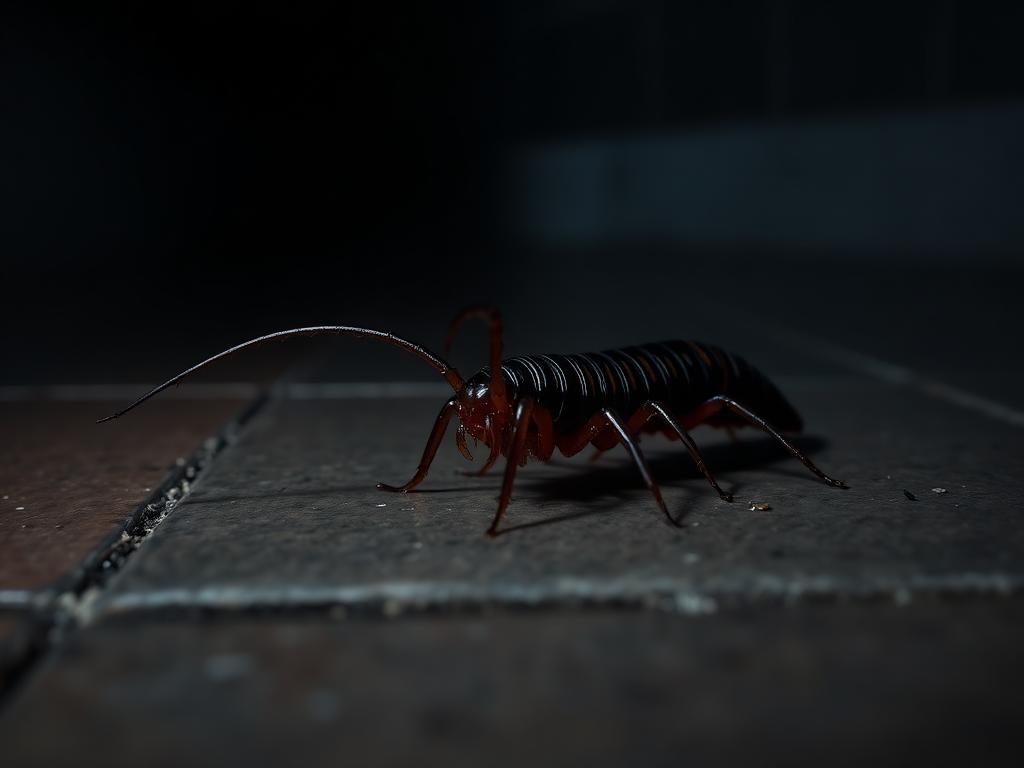
Commonly mistaken for millipede
Millipede questions we get asked
- Why did I suddenly get hundreds of millipedes after one storm?
- Heavy rain saturates soil, mulch, and leaf litter, pushing millipedes out in a mass migration toward the nearest dry, elevated surface. It's a moisture-driven event, not an infestation that built up overnight.
- Are millipedes dangerous to my kids or pets?
- No. They don't bite or sting, and the defensive fluid some species release only causes mild skin irritation with direct, prolonged contact. The main issue is nuisance volume, not health risk.
- Is this worse in certain parts of Hampton Roads?
- Yes. Chesapeake, Suffolk, and Virginia Beach properties with heavy mulch beds, poor drainage, or vented crawl spaces over clay soil see noticeably heavier activity than well-drained, less-mulched properties.
- Will fixing the mulch and grading actually stop this?
- In most cases, yes, moisture correction addresses the root cause. Perimeter treatment handles the current season's activity while grading and mulch changes reduce how many millipedes are drawn to the foundation in future rain events.
- How fast will treatment clear an active migration?
- A perimeter application typically reduces new crossings within a few days, though bodies from the current event still need to be swept up since the treatment doesn't remove millipedes already on paved surfaces.
Services that handle millipede problems
- Cockroach ControlGerman roach elimination indoors, American and oriental roach control at the source.
- Ant ControlSpecies-specific baiting for odorous house, Argentine, pavement, and fire ants.
- Rodent Control & ExclusionTrapping paired with physical exclusion so they cannot come back.
- Mosquito & Tick ControlYard programs targeting harborage and standing-water breeding sites.
- Bed Bug TreatmentInspection-driven treatment programs with confirmation follow-ups.
- Wildlife ExclusionSquirrel, raccoon, opossum, and bat removal with permanent structural sealing.
Further reading
- If you are seeing camel crickets indoors, the crawl space is the storyCamel crickets are an indicator species. Killing the ones you see does nothing about the condition that produced them.
- German roaches versus American roaches: two completely different problemsOne is an indoor harborage and sanitation issue. The other is usually a crawl space, sewer, or moisture defect. Treating them the same wastes money.
Others in this category
Confirm the ID and get it handled
Send a photo and the location in the structure. A licensed technician will tell you the species and whether it needs a visit.
Request an inspection