
Biting & stinging
Paper Wasp Control in Hampton Roads
Open umbrella nests under eaves, rails, and grill covers.
Polistes spp.
- Adult size
- 3/4" – 1"
- Color
- Brown with yellow markings
- Group size
- 20 – 75
- Lifespan
- Colony dies each winter
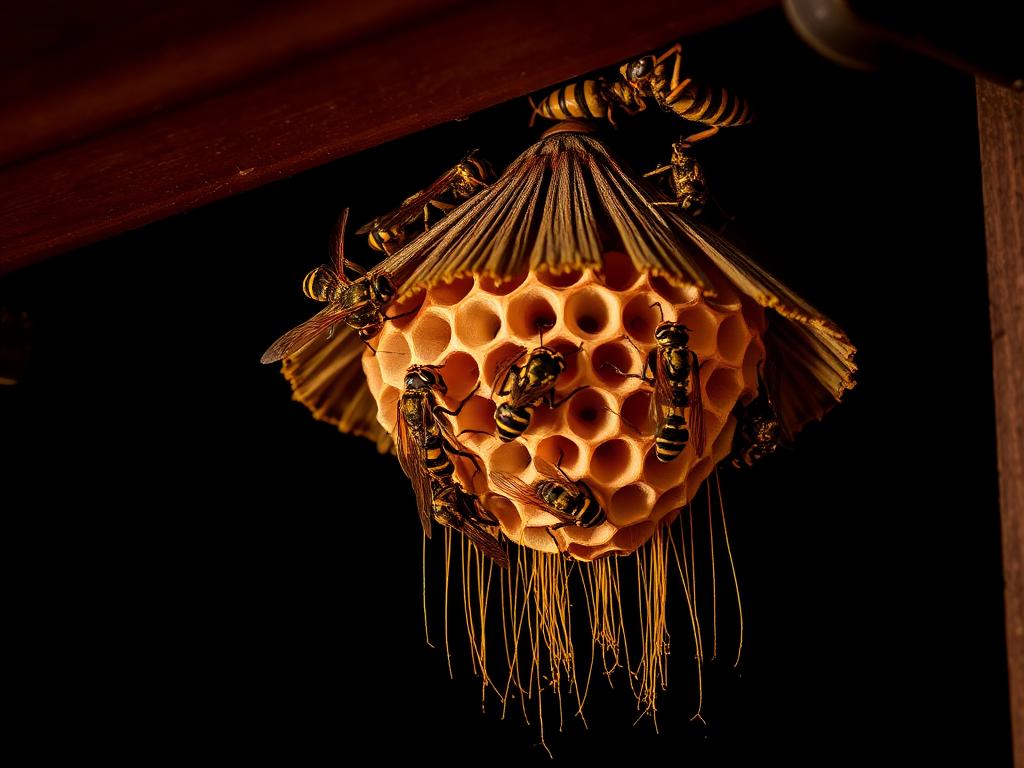
Paper wasps build the open, umbrella-shaped nests that show up under porch eaves, deck rails, grill covers, and mailbox posts across every city in Hampton Roads, and they are generally far less aggressive than yellowjackets unless the nest itself is directly disturbed. The nest's individual hexagonal cells are visible from below, unlike the enclosed papery ball of a yellowjacket nest, and a single nest typically holds a few dozen wasps rather than thousands.
Sheltered, overhung structural features are exactly what this species needs, and Hampton Roads housing stock supplies an abundance of them: covered porches, carport rafters, shutter gaps, and rail undersides all offer the dry, protected overhang paper wasps prefer for anchoring a new nest each spring. Coastal humidity does not deter them the way it limits some other insects, so nest-building continues steadily through the warm season wherever an undisturbed overhang exists.
Because the nest is visible and exposed rather than hidden underground, paper wasp problems are usually caught earlier than yellowjacket infestations, but that visibility does not make removal risk-free — a nest built directly over a doorway, grill, or frequently used walkway puts residents in repeated close contact, and a wasp defending its brood at close range will sting.
How to identify paper wasp
Slender wasp with long trailing legs in flight, building an exposed comb nest with visible cells under eaves, deck rails, and porch ceilings.
When paper wasp activity peaks
Nests reach full size and defensiveness in August and September.
August — activity index 95 / 100 (annual peak)
Paper Wasp biology and life cycle
A single mated queen that overwintered in a wood pile, bark crevice, or attic void emerges in spring and begins building a small paper nest alone, laying the first eggs and foraging for herself until the initial workers mature. From that point the workers take over nest expansion and foraging while the queen concentrates on egg production, and the nest grows outward with new cells added around the edge through the summer. Colonies remain far smaller than yellowjacket colonies, typically topping out at a few dozen to around a hundred individuals on a single nest. In late summer the colony produces new reproductive males and queens, mating occurs, and the fertilized queens disperse to overwinter while the original nest and its remaining workers die off with the first hard frost, so each spring's nest is a fresh start rather than a returning colony.
When paper wasp pressure peaks in Hampton Roads
Nest-building begins in April or May as overwintered queens emerge, with visible nests growing steadily through June and July as the first worker generations mature. Peak nest size and worker activity generally occur in August, coinciding with the point in the season when accidental disturbance — brushing a rail, opening a grill lid, reaching into a shutter gap — is most likely to trigger defensive stinging. Activity declines through September and October as the colony shifts to producing new queens, and nests are abandoned entirely after the first hard frost, though old, empty nests can remain visible on a structure well into winter.
Paper Wasp threat profile
Structural risk
10/100
Damage to framing, floors and finishes
Health risk
65/100
Bites, stings, allergens and pathogens
Spread rate
30/100
How fast it multiplies once established
DIY difficulty
75/100
How reliably store products fail on it
Does yours match? Interactive ID checklist
0 of 4 traits matched
Tick everything you can actually see.
Why it is in your house
Sheltered eaves and porches across the region's housing stock give them protected nest sites all season.
Field notes: paper wasp you did not know
- Fact 01
The open, upside-down umbrella comb is unmistakable — no paper envelope around it.
- Fact 02
They are beneficial predators and only defend within a few feet of the nest.
- Fact 03
Overwintering queens are why they reappear in the same soffit every year.
Signs of paper wasp activity
- An open, umbrella-shaped nest with visible hexagonal cells is present under an eave, rail, or overhang.
- Wasps are seen repeatedly landing on and departing from the same fixed point on the structure.
- Nest-building activity is noticed in spring on porch ceilings, shutter gaps, or grill covers.
- Increased wasp presence occurs around outdoor light fixtures or porch furniture near an unseen nest.
- A nest is discovered only when disturbed during yard work, grilling, or seasonal decoration hanging.
- Multiple small nests appear on the same structure in a season, especially on homes with several sheltered overhangs.
What paper wasp activity costs you
Paper wasps sting when the nest itself is disturbed or a wasp is trapped against skin or clothing, and while individual stings are painful, this species does not attack in the large aggressive groups typical of yellowjackets. As with any stinging insect, anyone with a known allergy to insect venom should treat a sting seriously and seek medical attention if swelling spreads beyond the sting site or breathing is affected. The more common practical risk in Hampton Roads homes is a nest built directly over a frequently used doorway, walkway, or grill, where repeated close-range activity increases the odds of an accidental encounter compared with a nest tucked in an unused corner.
What actually removes it
Nest treatment and removal, then residual eave treatment as part of a recurring program.
Quarterly Pest ControlThe Guardex paper wasp treatment plan
01 · Nest inspection
The technician locates all active nests on the structure, since multiple smaller nests are common on homes with several eaves, rails, or overhangs, rather than assuming a single nest accounts for all activity.
02 · Direct nest treatment
An aerosol or dust product labeled for wasp nests is applied directly to the nest, typically during early morning or evening when wasps are less active and less likely to take flight defensively.
03 · Nest removal
Once activity has stopped, the physical nest is removed from the structure, both to confirm elimination and because an old nest can sometimes attract attention from other insects or be reused as a foundation the following season.
04 · Residual eave treatment
As part of a recurring pest program, a residual treatment is applied to eaves, rails, and other overhangs to discourage new queens from establishing nests in the same locations the following spring.
Why store-bought products usually fail
A visible nest tempts homeowners into a quick aerosol spray from a step stool, but wasps defending an active nest at close range will scatter and sting before a retail product fully knocks the colony down, and a nest positioned over a doorway or walkway turns that encounter into repeated close contact for household traffic afterward. Ladder work near rooflines and porch ceilings also introduces a fall risk that outweighs the relatively small size of most paper wasp colonies. Professional treatment applied at low-activity times, followed by physical nest removal, addresses both the immediate colony and the structural conditions that invite a new nest in the same spot the following year.
Prevention checklist
- Check covered porches, carports, and eaves in early spring for new small nests before they grow large.
- Seal shutter gaps and other small overhung voids that offer an anchor point for a new queen.
- Store grills and outdoor furniture with covers checked before use each season.
- Keep porch light fixtures clear of nest-building activity by checking fixtures periodically through summer.
- Enroll sheltered overhangs in a recurring residual treatment program rather than reacting nest by nest.
- Remove old, abandoned nests over winter so the site does not carry visual or structural attraction into spring.
Where paper wasp pressure runs highest
Commonly mistaken for paper wasp
Paper Wasp questions we get asked
- Are paper wasps as dangerous as yellowjackets?
- Generally no. Paper wasp colonies are much smaller and less aggressive unless the nest is directly disturbed, whereas yellowjacket colonies are larger and defend more aggressively; both should still be treated professionally rather than provoked.
- The nest is over my back door — how fast can this be handled?
- Nests in high-traffic locations like doorways or grills are typically prioritized for prompt service since the risk of accidental disturbance is highest in those spots.
- Do you service paper wasp nests throughout Hampton Roads?
- Yes, this is a routine seasonal call across Virginia Beach, Chesapeake, Norfolk, Portsmouth, Suffolk, Hampton, and Newport News from spring through fall wherever porches and covered overhangs are common.
- What does removal cost and how quickly does it work?
- Cost depends on the number and location of nests on the structure; treated nests typically show a stop in activity within a day, after which the physical nest is removed.
- Will wasps rebuild in the same spot?
- The exact nest is not reused since the colony dies off each fall, but the same sheltered overhang can attract a new queen the following spring unless the spot is sealed or included in a residual treatment program.
Services that handle paper wasp problems
- Cockroach ControlGerman roach elimination indoors, American and oriental roach control at the source.
- Ant ControlSpecies-specific baiting for odorous house, Argentine, pavement, and fire ants.
- Rodent Control & ExclusionTrapping paired with physical exclusion so they cannot come back.
- Mosquito & Tick ControlYard programs targeting harborage and standing-water breeding sites.
- Bed Bug TreatmentInspection-driven treatment programs with confirmation follow-ups.
- Wildlife ExclusionSquirrel, raccoon, opossum, and bat removal with permanent structural sealing.
Further reading
- If you are seeing camel crickets indoors, the crawl space is the storyCamel crickets are an indicator species. Killing the ones you see does nothing about the condition that produced them.
- German roaches versus American roaches: two completely different problemsOne is an indoor harborage and sanitation issue. The other is usually a crawl space, sewer, or moisture defect. Treating them the same wastes money.
Others in this category
Asian Tiger Mosquito
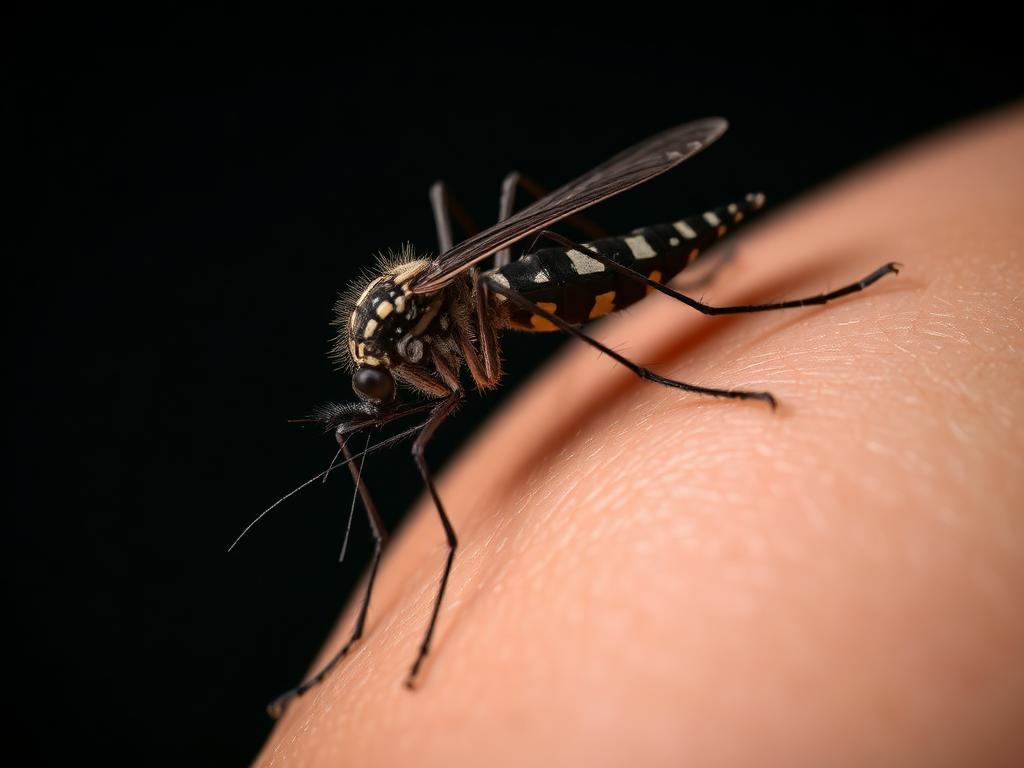
Aggressive daytime biter that breeds in containers, not marsh.
Salt Marsh Mosquito
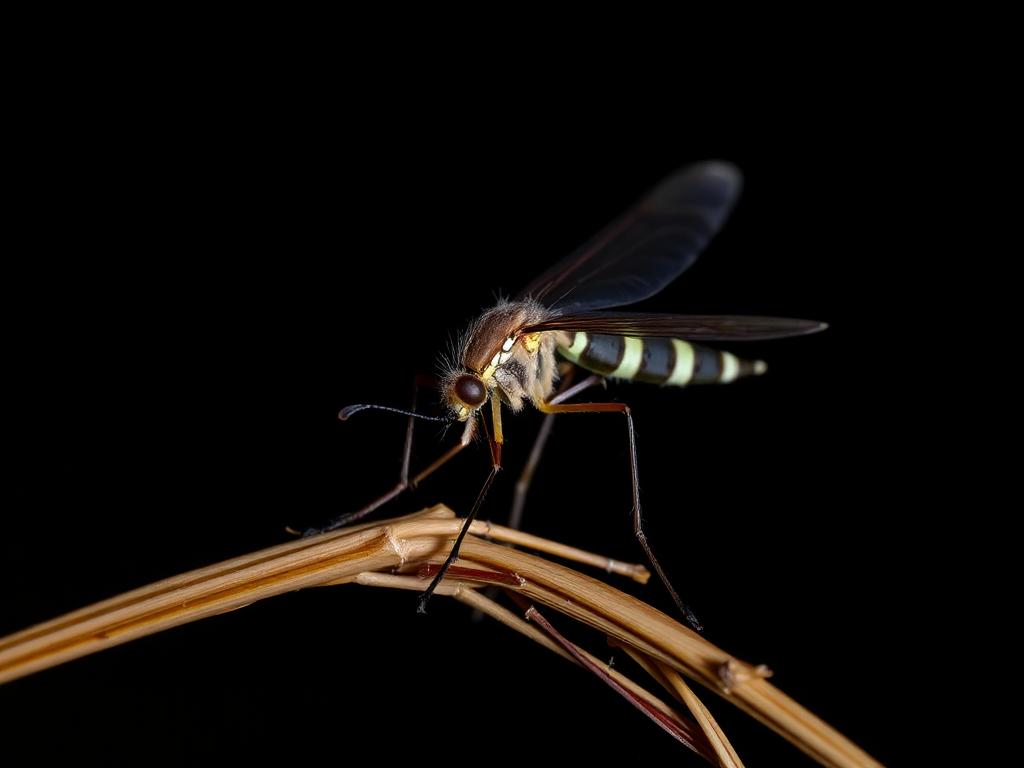
Flies in from tidal marsh in huge broods after high tides and rain.
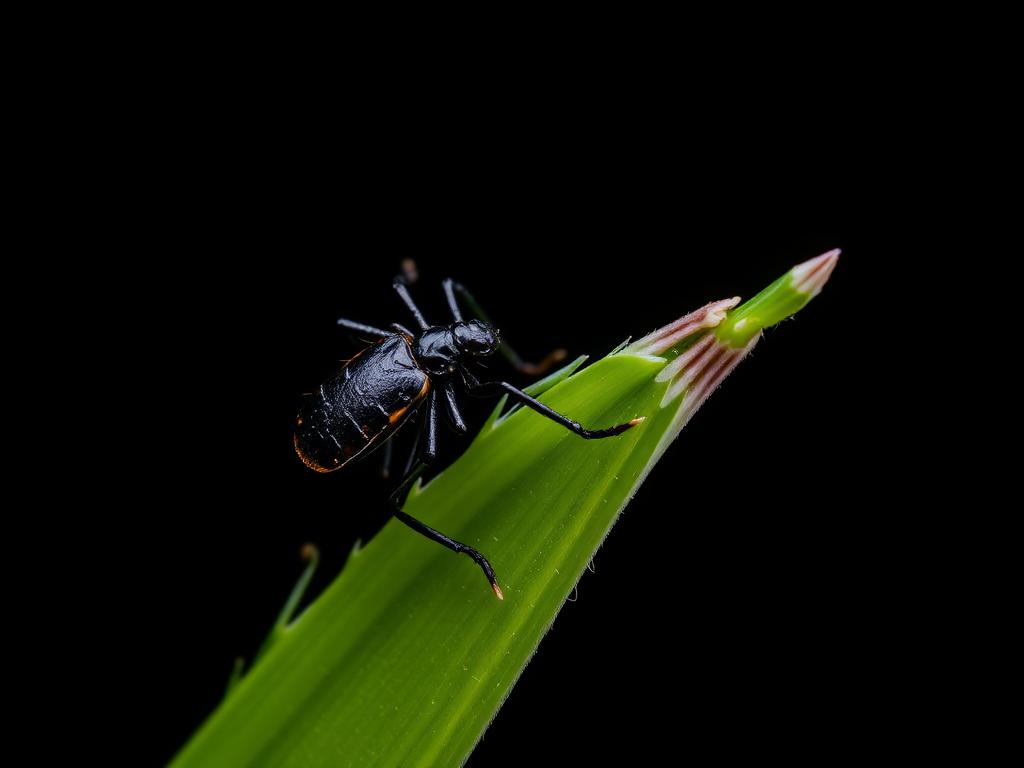
Blacklegged (Deer) Tick
The Lyme disease vector, active in leaf litter and wooded edges.
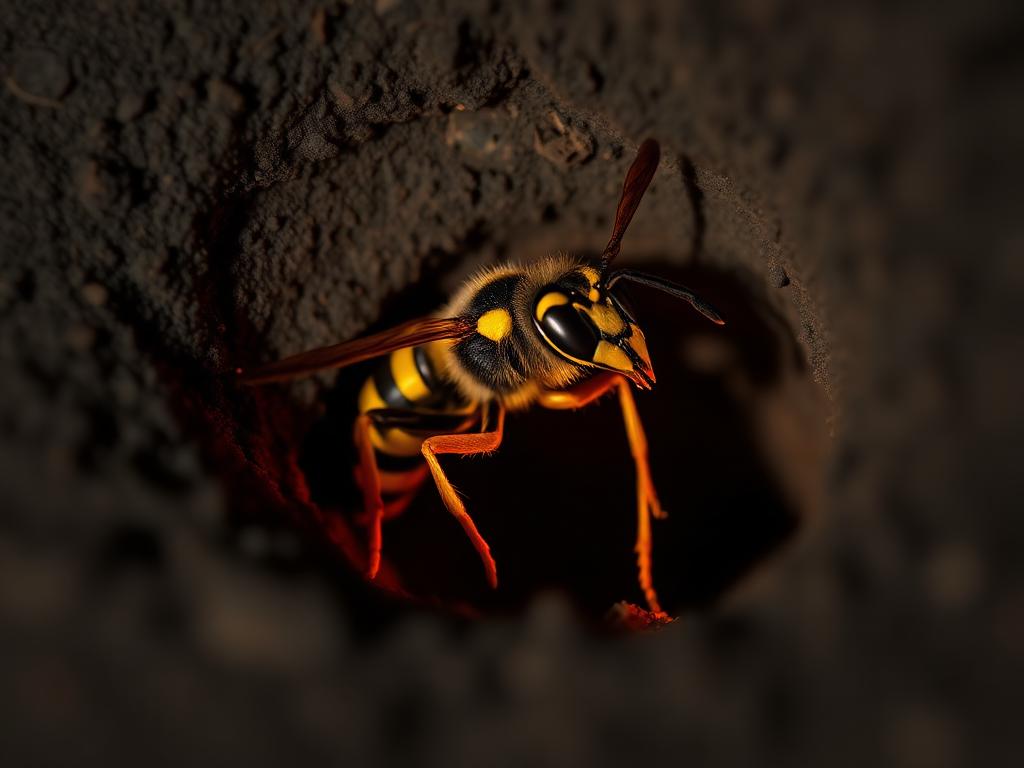
Yellowjacket
Ground and void nests that turn aggressive in late summer.
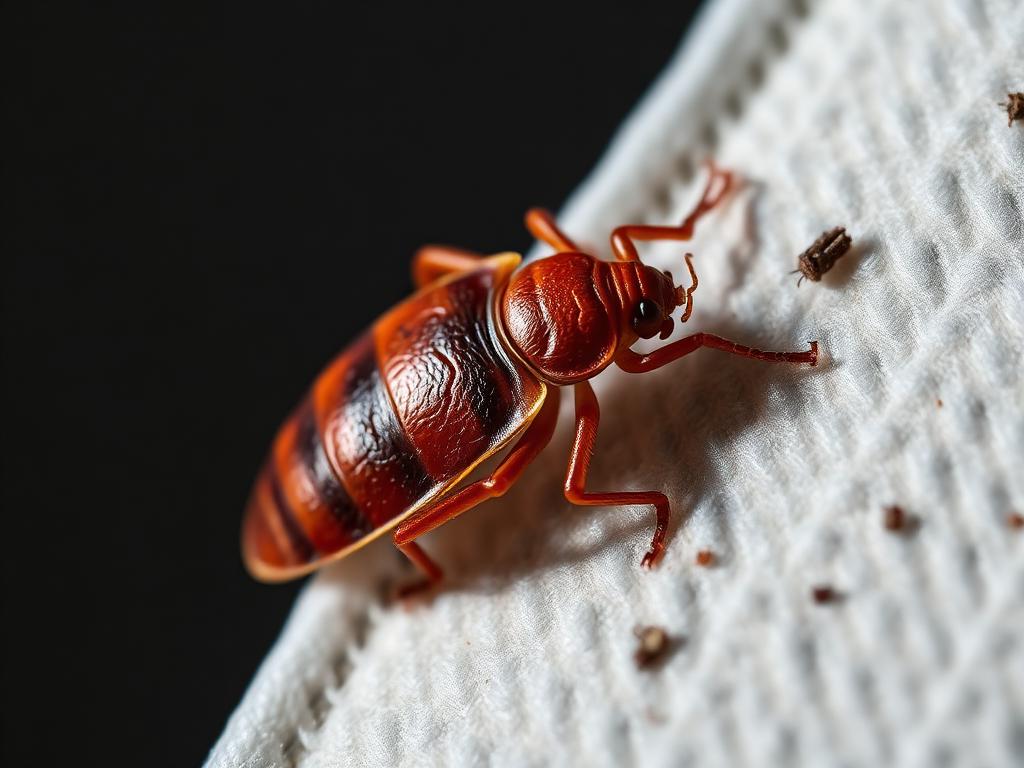
Bed Bug
Introduced by travel and used furniture — never by sanitation.
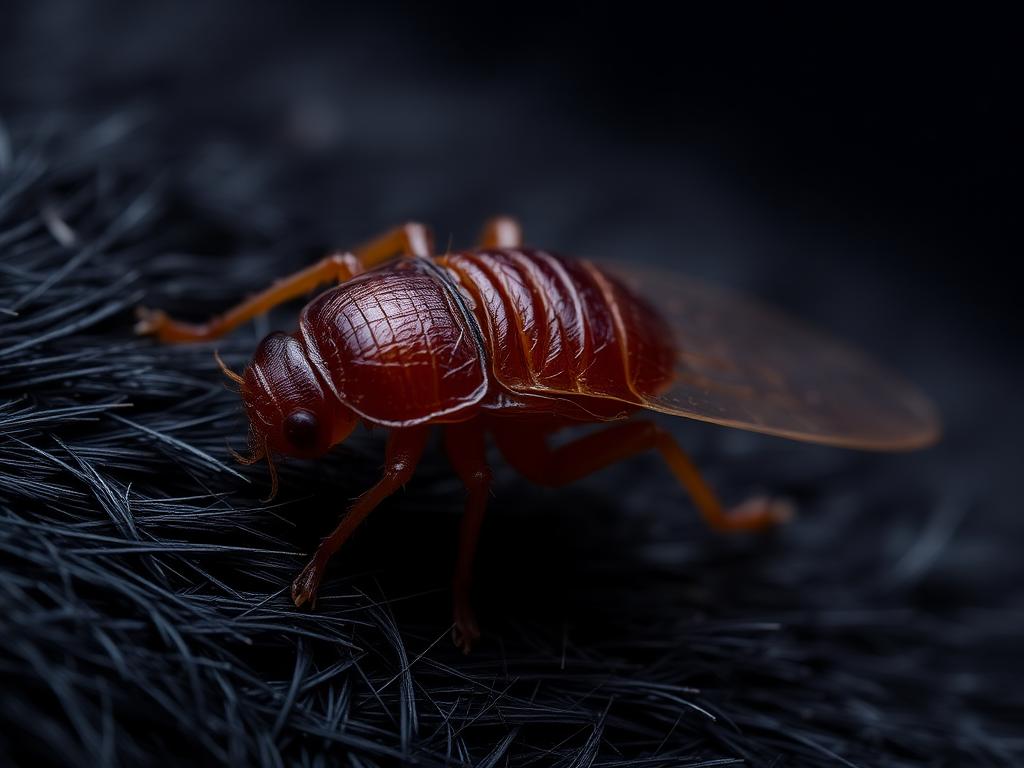
Cat Flea
Most of the population is eggs and larvae in carpet, not adults on the pet.
Confirm the ID and get it handled
Send a photo and the location in the structure. A licensed technician will tell you the species and whether it needs a visit.
Request an inspection